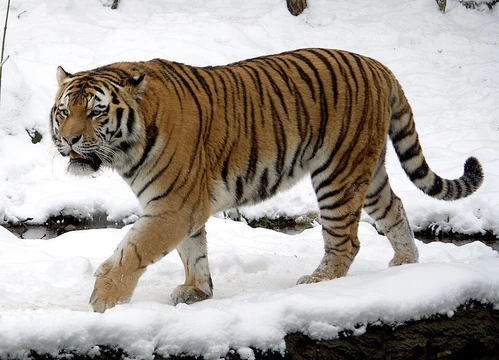
Tiger
Large Asian cat, apex predator, endangered by human activity.

Photo (c)2007 Derek and Julie Ramsey ( Ram-Man ) edit by Chris_huh . · Public domain
The tiger (Panthera tigris) is a large cat and a member of the genus Panthera native to Asia. It is an apex predator that primarily hunts hooved mammals by ambush, lives a mostly solitary life, and occupies home ranges that males defend from other males. Since the early 20th century, tiger populations have lost at least 93% of their historic range and are now listed as Endangered on the IUCN Red List, with major threats including habitat destruction, poaching, and human–wildlife conflict.
- Scientific name
- Panthera tigris
- Subspecies count
- Traditionally nine, but some recognize only two (mainland Asian and Sunda Islands)
- Head-body length
- 1.4–2.8 m (4 ft 7 in – 9 ft 2 in)
- Tail length
- 0.6–1.1 m (2 ft 0 in – 3 ft 7 in)
- Shoulder height
- 0.8–1.1 m (2 ft 7 in – 3 ft 7 in)
- Conservation status
- Endangered (IUCN)
Lore & Background
The tiger has a powerful, muscular body with a large head and paws, a long tail, and orange fur that fades to white in parts, with black, mostly vertical stripes. It inhabits mainly forests across Asia, from coniferous and temperate broadleaf forests in the Russian Far East to tropical and subtropical moist broadleaf forests in the Indian subcontinent and Southeast Asia. Females give birth to usually two or three cubs that stay with their mother for about two years before establishing their own home ranges.
Reader's Guide
The tiger is among the most popular of the world's charismatic megafauna and has been kept in captivity since ancient times, trained to perform in circuses and other entertainment shows. It features prominently in the ancient mythology and folklore of cultures throughout its historic range and continues to appear in culture worldwide. Conservation measures include action plans, anti-poaching patrols, monitoring schemes, wildlife corridors, and planned reintroductions. The tiger is legally protected in all range countries, but its range remains severely fragmented, and its population has declined by 53% to 68% since the late 1990s. The species' taxonomy is under review by the IUCN SSC Cat Specialist Group due to varied interpretations of genetic and morphological data.
Did You Know?
- Tigers can interbreed with other Panthera cats; ligers (male lion × female tiger) grow far larger than either parent due to genetic factors.
- The earliest fossil remains of the modern tiger are jaw fragments from Lantian County, China, dated to the early Pleistocene.
- The tiger is an apex predator that preys mainly on hooved mammals, which it takes by ambush.
Evolutionary Lineage & Taxonomic Placement
The tiger's evolutionary story stretches back millions of years. Ancestors of the Panthera genus split from the Felinae subfamily roughly 6.37 million years ago. A 2010 molecular phylogenetics study clarified that the tiger and snow leopard are sister species, diverging from their common ancestor around 3.9 million years ago. The tiger then carved out its own unique evolutionary path toward the end of the Pliocene, approximately 3.2 million years ago. By contrast, the lion, leopard, and jaguar form a closer-knit group, with the jaguar splitting from the lion-leopard ancestor between 3.6 and 2.5 million years ago, and lions and leopards finally separating around 2 million years ago. An early fossil, P. blytheae from northern Central Asia, was once thought to be the oldest known Panthera, but later research reclassified it into a separate genus, Palaeopanthera. The tiger sits within the subfamily Pantherinae, genus Panthera, alongside the lion, jaguar, leopard, and snow leopard.
The Mechanics of the Roar & Physical Scale
The thunderous roar that defines Panthera species is produced by a specialized larynx and an elongated hyoid apparatus. The hyoid bone hangs from a chain of smaller bones—tympanohyal, stylohyal, epihyal, and ceratohyal—anchored in the mandible and skull. Within the larynx, vocal folds composed of dense collagen and elastic fiber stretch a ligament to a length that generates the deep, resonant sound. When the large fibro-elastic pad folds, it creates a low natural frequency that sets the cartilage walls vibrating, shifting air resistance from high to low and producing the roar. The lion possesses the longest larynx, yielding the most powerful call, audible up to 10 km away under ideal conditions. All five Panthera species share the elongated hyoid, yet the snow leopard lacks the large vocal-fold pad and therefore cannot roar. In terms of body mass, male tigers range from 100 to 306 kg, while exceptionally heavy individuals in the wild have surpassed that figure and reached roughly 450 kg in captivity. A lion-tiger hybrid called Nook reportedly exceeded 550 kg.
Conservation Status & Human Oversight
Every member of the Panthera genus carries a threatened designation on the IUCN Red List. The tiger is classified as Endangered, the lion, leopard, and snow leopard as Vulnerable, and the jaguar as Near Threatened. Cheetahs are also Vulnerable, while cougars are of Least Concern. All populations are in decline. The principal threats shift by region, but human interaction remains a central challenge. In the United States, the Captive Wildlife Safety Act restricts interstate movement of big cats, and only organizations meeting strict U.S. Fish and Wildlife Service criteria—non-profit status, no breeding, no commercial trade, no public contact, record-keeping, and inspection access—qualify as true sanctuaries. Internationally, regulations vary widely: Austria permits ownership only in zoologist- or veterinarian-supervised zoos with specific enclosure and feeding standards; Russia and South Africa regulate private ownership of native big cats; and Denmark, Thailand, and India ban private ownership entirely.
Ecological Role & Geographic Range
As obligate carnivores, big cats occupy the apex of their respective food chains, with no natural predators of their own. All members of the Felidae family share similar musculature, cardiovascular systems, skeletal frames, and behavioral patterns, yet the Panthera genus stands apart in size and power. The native ranges of these large cats span the Americas, Africa, and Asia, with the leopard and tiger also extending into Europe—specifically into Russia. The cheetah and cougar, while sometimes colloquially grouped with big cats, belong to the subfamily Felinae and differ physically from the Panthera species to a greater degree than they do from smaller cats. The Felinae subfamily encompasses mostly small to medium-sized cats, including domestic cats, alongside larger members like the cougar and cheetah. This broad taxonomic spread underscores how the phrase big cat can mean different things depending on context: strictly the five Panthera species, or any cat considered large in stature.
Common Misconceptions (Editorial)
A common misconception is that tigers live in Africa; in fact, the tiger is native only to Asia. Another is that all tigers belong to many separate subspecies; however, some authorities recognize only two subspecies: mainland Asian and Sunda Islands. Additionally, some people think tigers regularly hunt large prey without ambush, but the facts confirm they primarily take hooved mammals by ambush.
Why It Matters (Editorial)
The tiger endures as a powerful symbol of wilderness and ecological health, yet its continued existence hinges on urgent conservation action. With over 93% of its historic range lost and ongoing threats from poaching and habitat destruction, saving the tiger means protecting entire forest ecosystems that countless other species depend on. Its fate is a stark reminder that humanity’s choices determine whether such apex predators persist for future generations.
Gallery
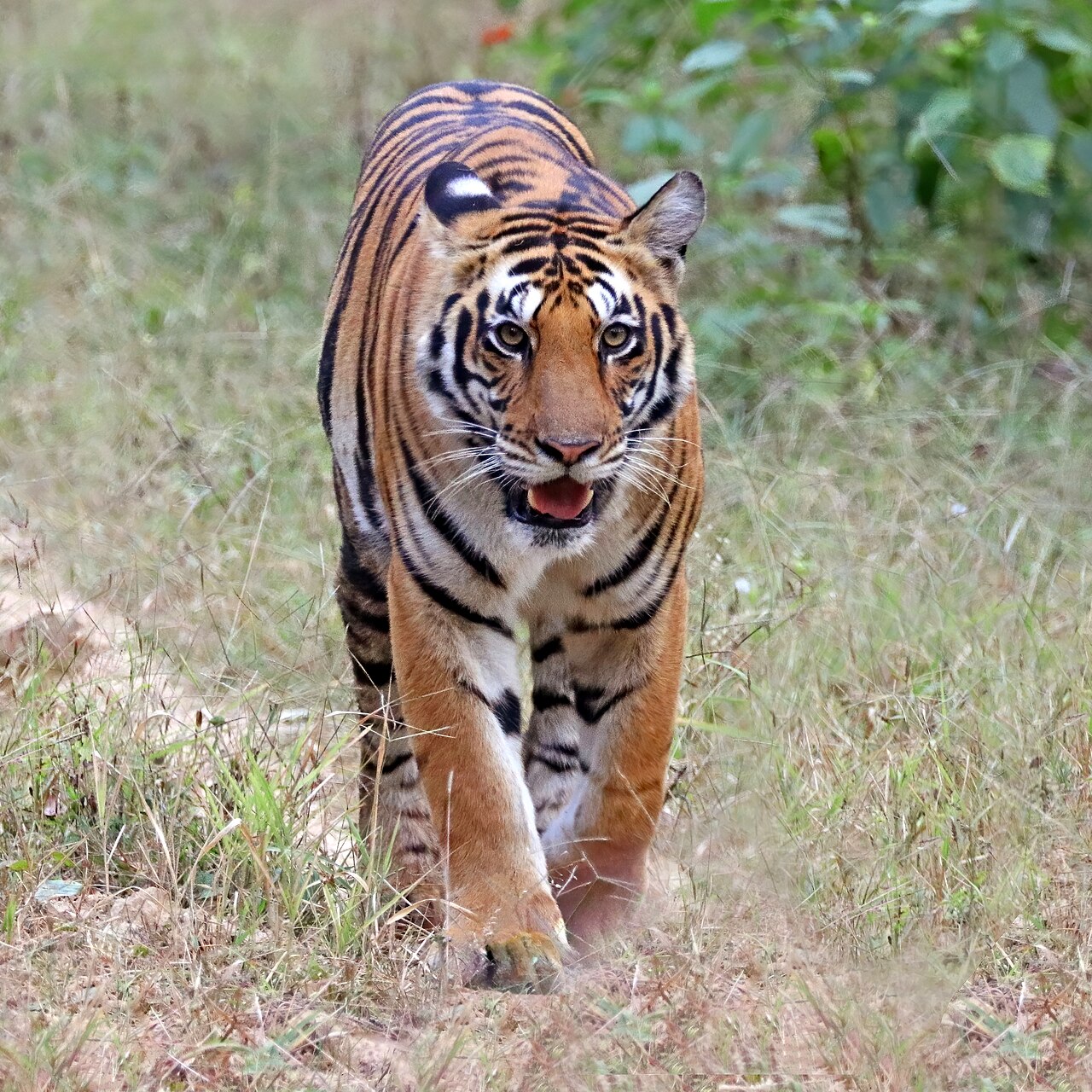
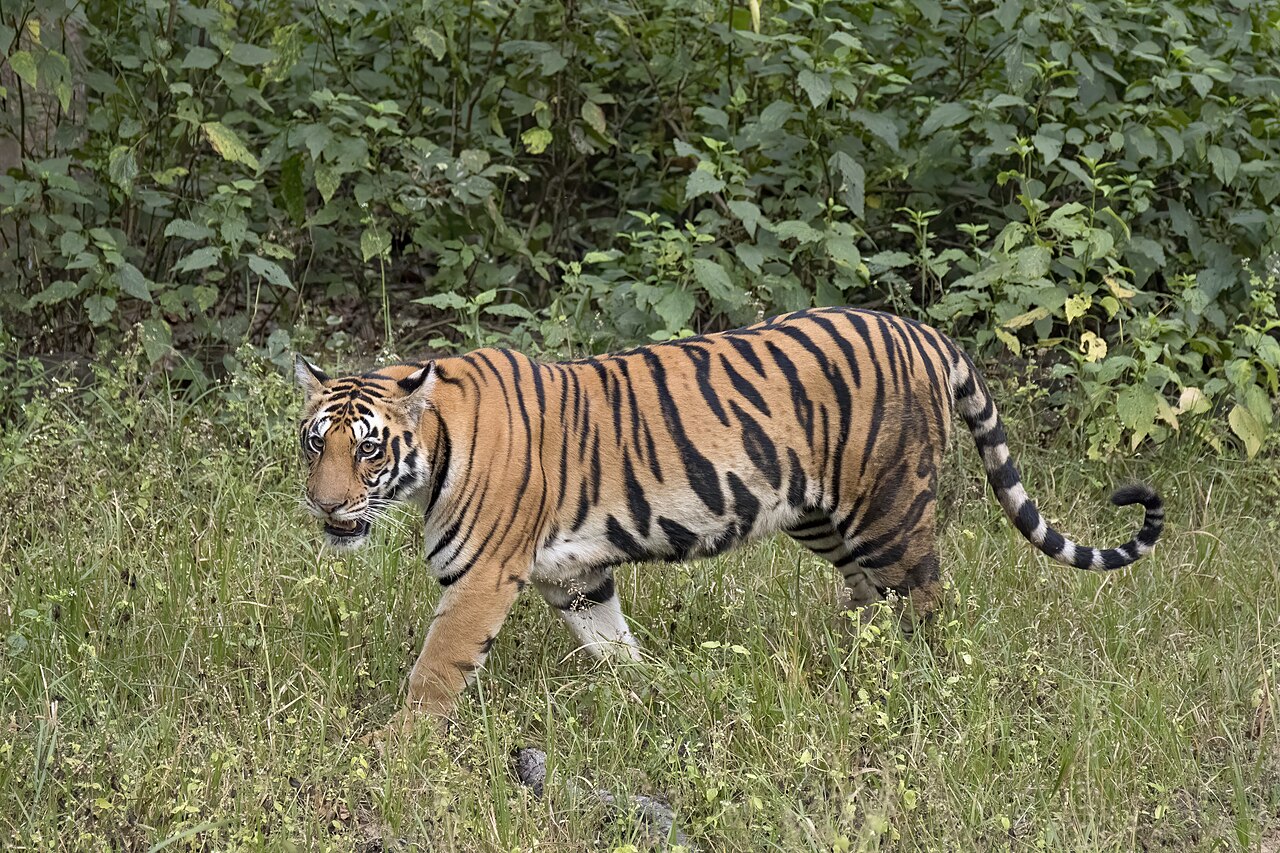
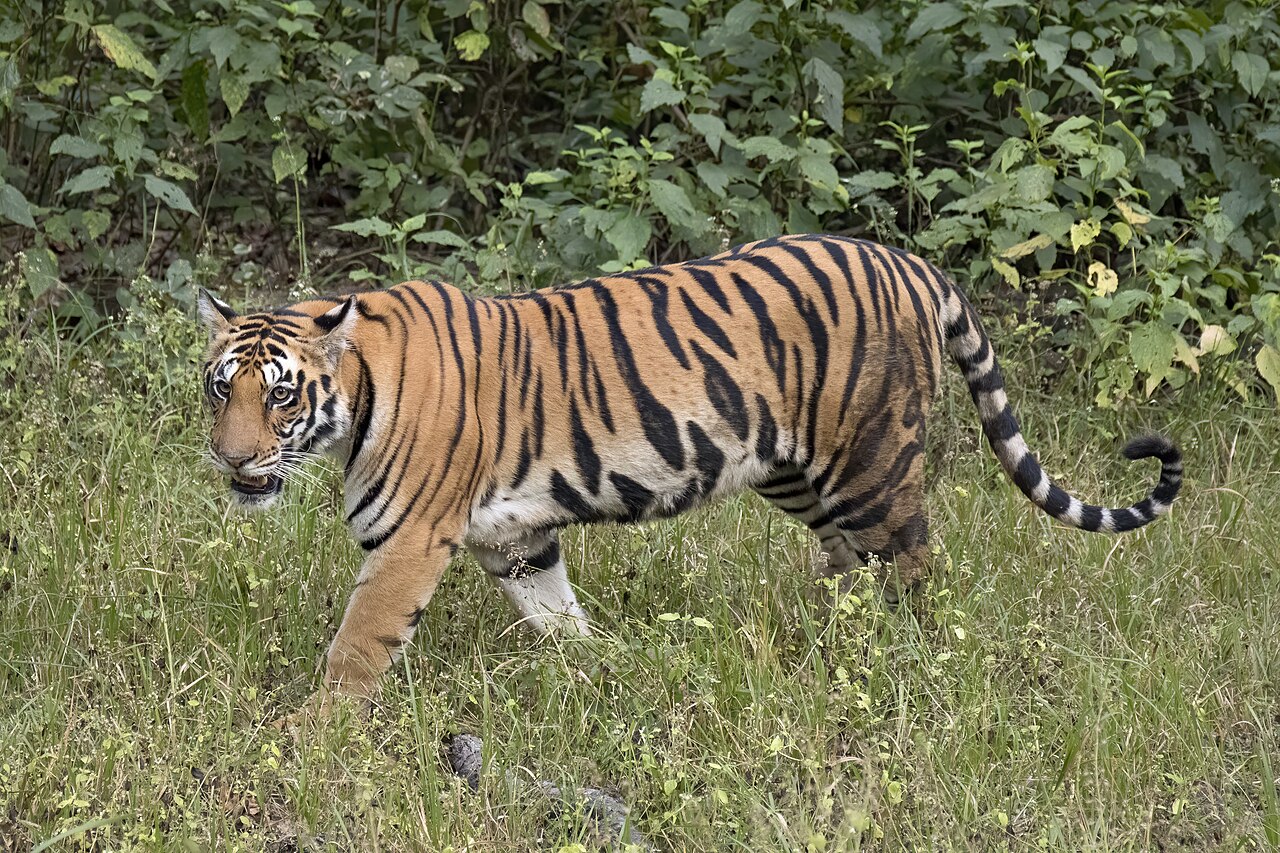
Frequently Asked Questions
What is a tiger?
The tiger (Panthera tigris) is the largest living member of the cat family, found across forests, mangroves, and grasslands in Asia. It sits at the top of its food web, taking down hooved prey through surprise attacks rather than prolonged chases.
How many tiger subspecies are there?
Classic taxonomy lists nine subspecies, but newer genetic work has narrowed the picture to just two broad lineages: mainland Asian tigers and Sunda Islands tigers. The exact number still sparks debate among taxonomists, so you may see different counts depending on the source.
Why are tigers endangered?
Since the early 1900s, tigers have lost at least 93 % of the range they once occupied, driven by deforestation, poaching for pelts and traditional-medicine bones, and growing clashes with people whose farmland overlaps tiger territory. They now carry an Endangered listing on the IUCN Red List.
How do tigers hunt and live?
Tigers are mostly solitary ambush predators that creep through dense cover and strike hooved mammals with a short, explosive lunge. Males patrol and defend large home ranges against rival males, while females enjoy more flexible territorial boundaries.
More in Big Cats 1-22
Spotted an error? Know more?
This is a living reference — every entry is fact-audited, and reader corrections feed straight into our audit queue. Suggest an edit · See this site's audit record