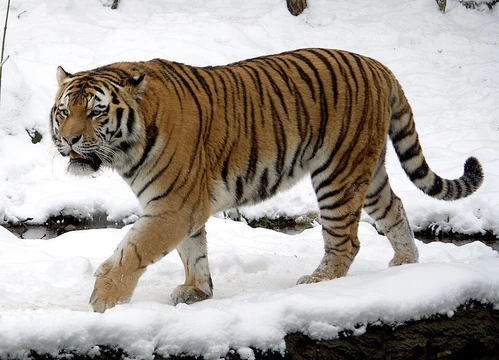
Snow leopard
A solitary, high-altitude carnivore of Asian mountain ranges.

Gregory Moine · CC BY 2.0
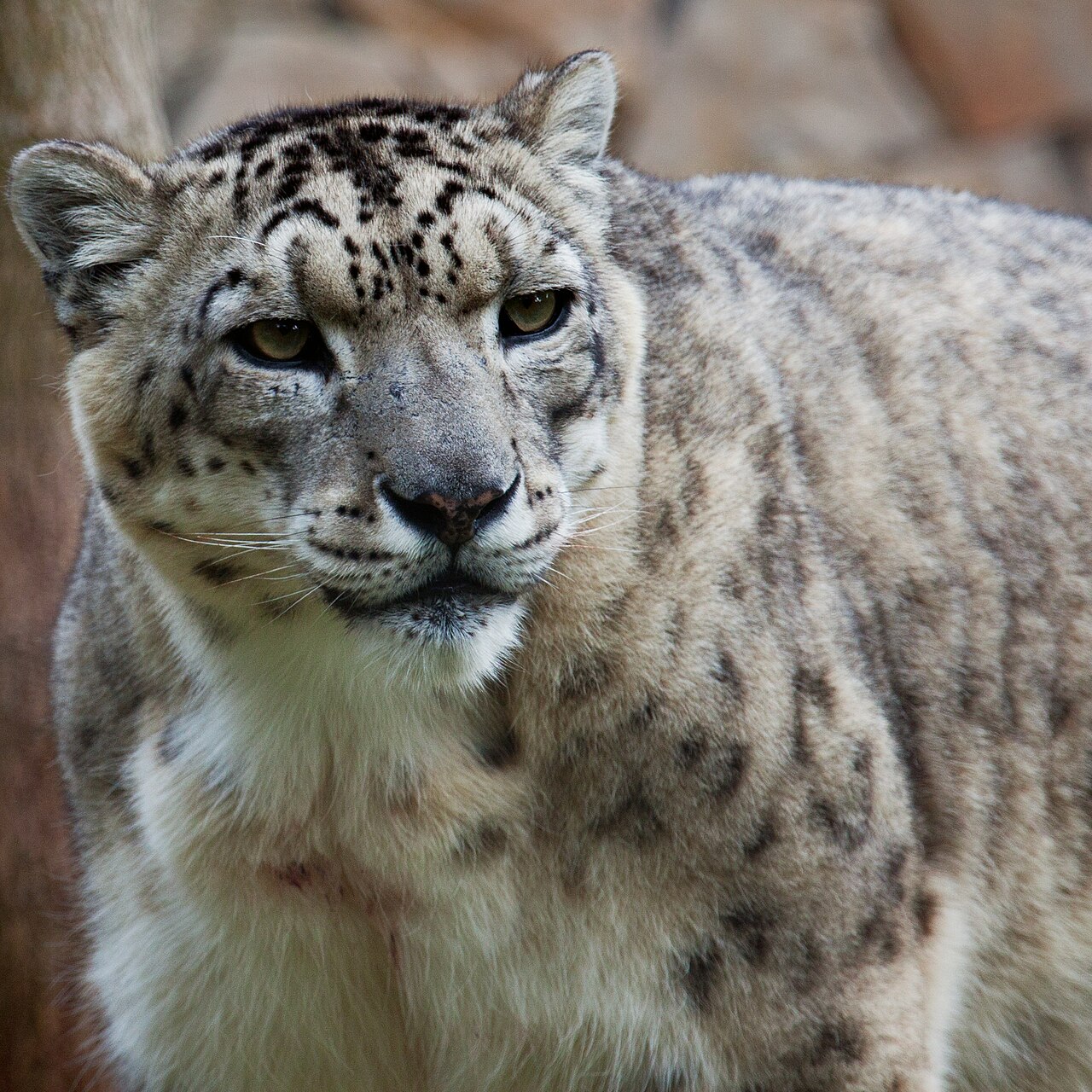
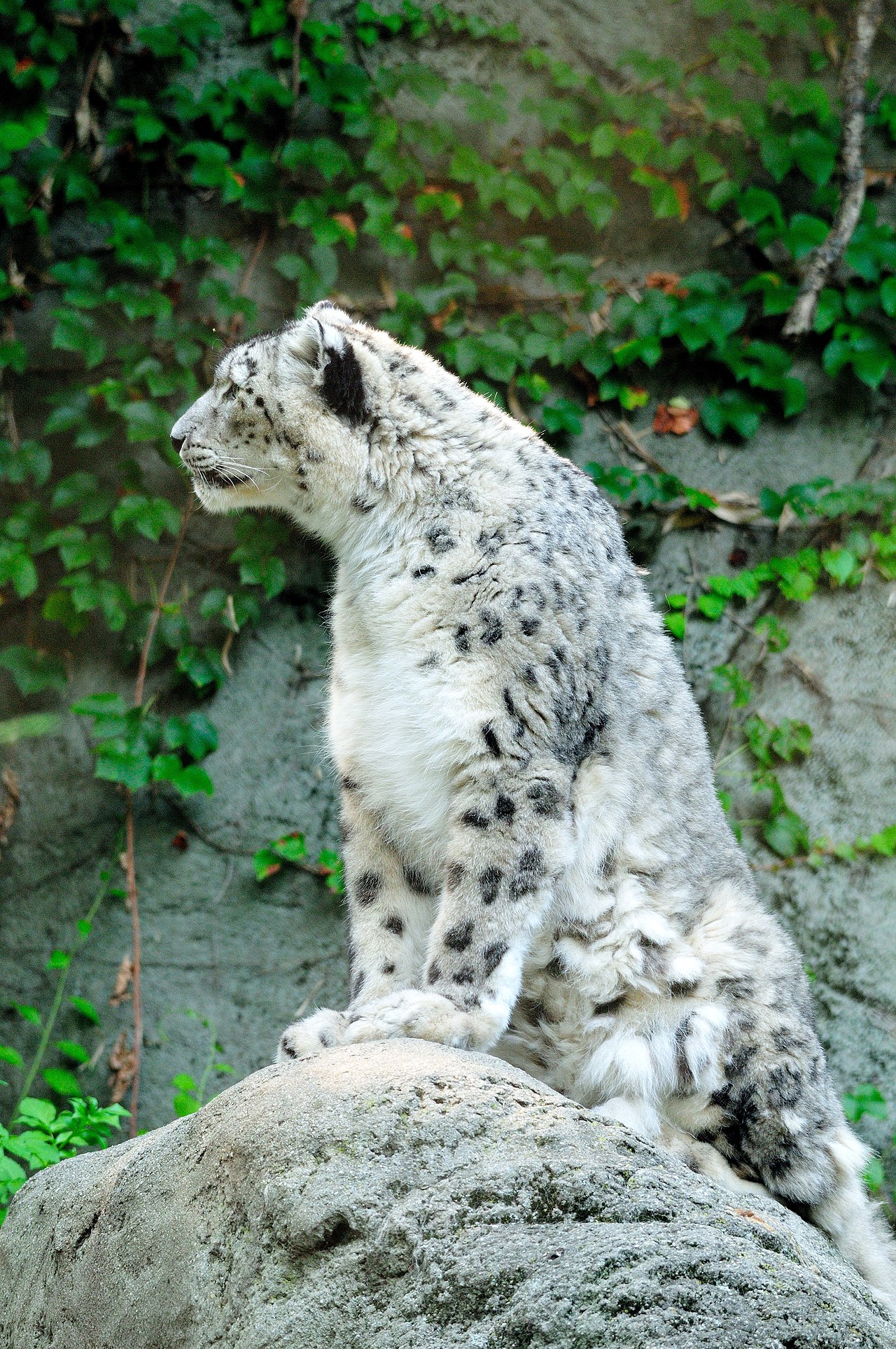
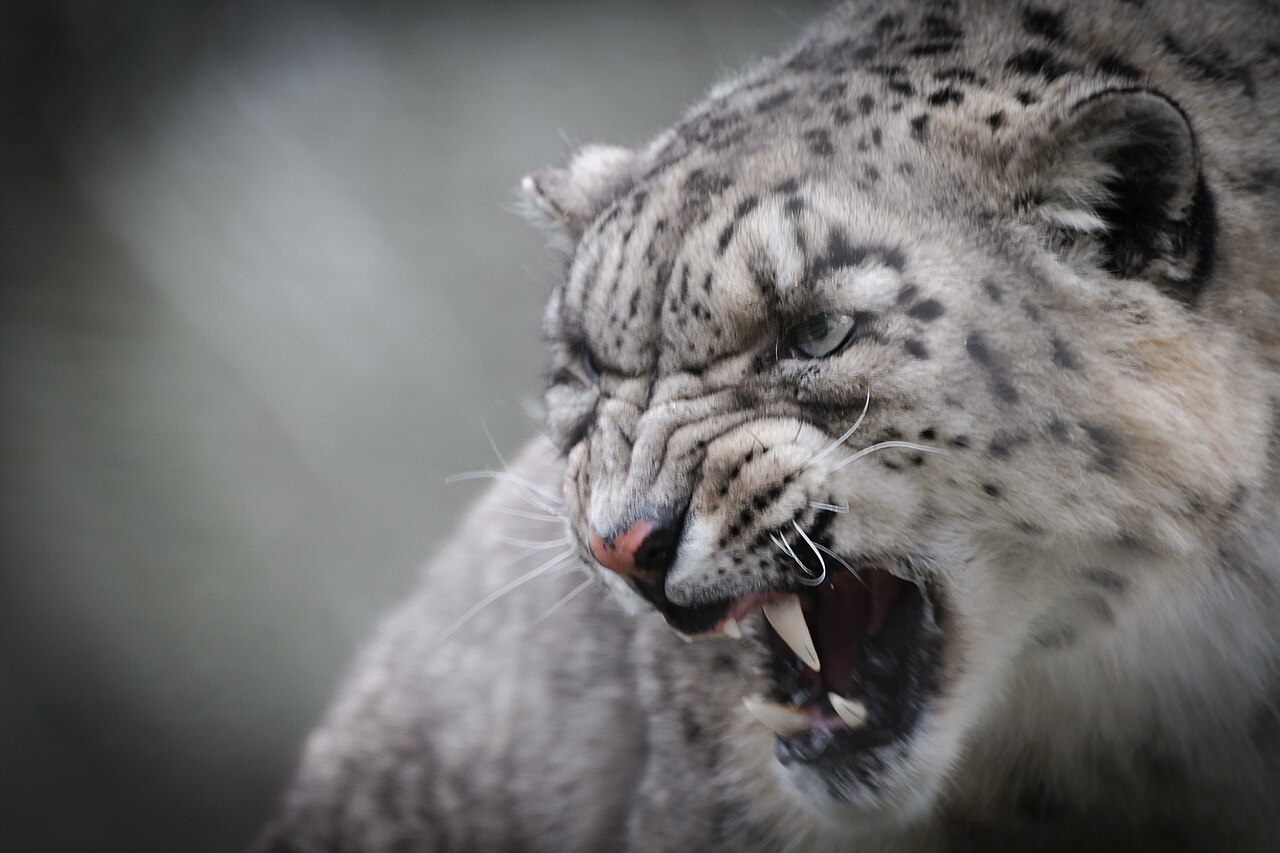
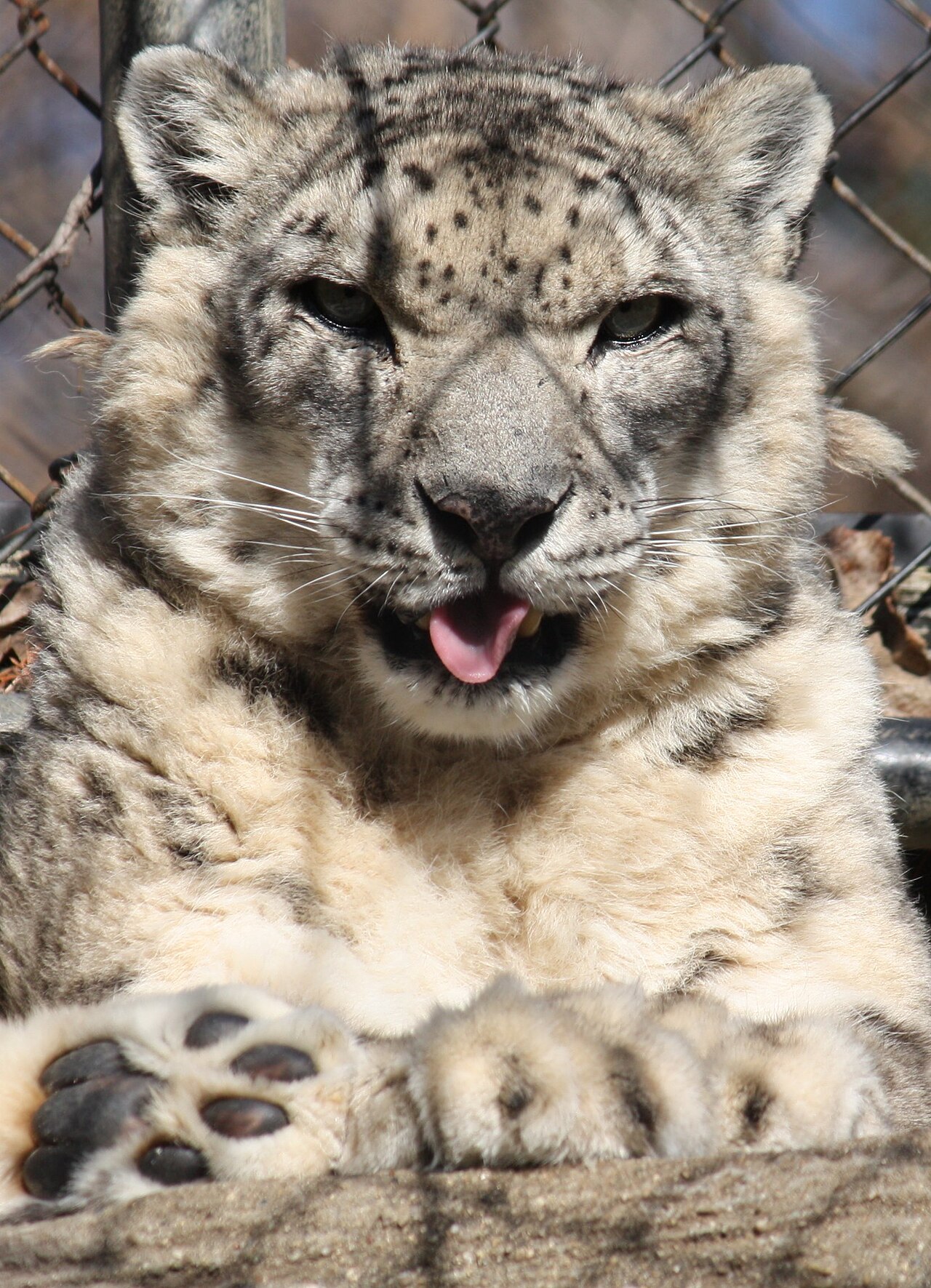
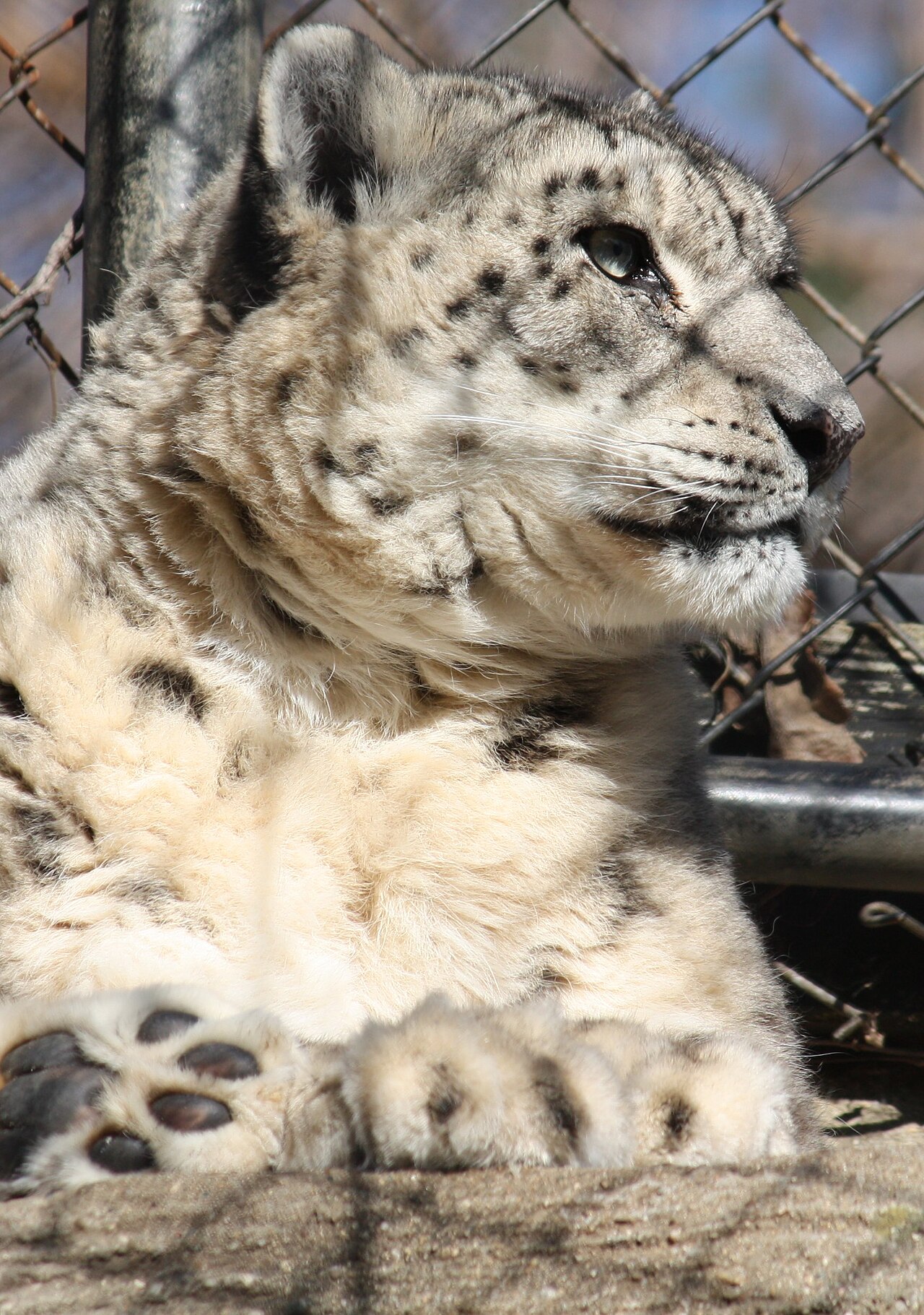
The snow leopard (Panthera uncia) is a felid species in the genus Panthera, native to the mountain ranges of Asia. It is known for its thick whitish to grey fur with black spots and rosettes, and its adaptations for cold, mountainous environments. The species is listed as Vulnerable on the IUCN Red List, threatened by poaching and habitat destruction, and is widely used in heraldry and as an emblem in Central Asia and parts of North India.
- Scientific name
- Panthera uncia
- Conservation status
- Vulnerable (IUCN Red List)
- Average male weight
- 45–55 kg (99–121 lb)
- Average female weight
- 35–40 kg (77–88 lb)
- Head-to-body length
- 75–150 cm (30–59 in)
Lore & Background
The snow leopard was long classified in the monotypic genus Uncia, but phylogenetic studies placed it within Panthera, forming a sister group with the tiger. Genetic divergence between the snow leopard and tiger is estimated at 4.62 to 1.82 million years ago. Two subspecies were described based on morphology, but genetic differences have not been confirmed, so it is regarded as a monotypic species.
Reader's Guide
The snow leopard's significance lies in its role as an apex predator in alpine and subalpine zones across Asia, from the Hindu Kush and Himalayas to southern Siberia and western China. Its adaptations—small rounded ears, broad paws, and thick tail—enable survival in cold, rocky environments. It is listed in CITES Appendix I and legally protected in most range countries. Its cultural importance is reflected in its use in heraldry and as an emblem in Central Asia and parts of North India. The snow leopard cannot roar due to short vocal folds, despite a partly ossified hyoid bone.
Did You Know?
- Its canine teeth are 28.6 mm long and more slender than those of other Panthera species.
- The snow leopard and tiger diverged between 3.7 to 2.7 million years ago.
- The word 'ounce' for the snow leopard originates from the Old French 'once', ultimately from Ancient Greek 'λύγξ' (lynx).
Evolutionary Lineage and the Sister-Species Bond
The snow leopard occupies a distinctive position in the evolutionary tree of big cats. A 2010 molecular phylogenetics study demonstrated that the snow leopard and the tiger are sister species, sharing a more recent common ancestor with one another than with any other member of the genus Panthera. That ancestral split took place roughly 3.9 million years ago during the Pliocene epoch, after which the tiger evolved into its own distinct form by the end of the Pliocene, around 3.2 million years ago. The lion, leopard, and jaguar form a separate cluster, having diverged from other big cats between 4.3 and 3.8 million years ago. The broader Pantherinae subfamily itself separated from the Felinae — the group encompassing domestic cats, cougars, and cheetahs — approximately 6.37 million years ago. A fossil once designated P. blytheae from northern Central Asia was originally described as the oldest known Panthera, yet subsequent research reclassified it into an entirely different genus, Palaeopanthera, illustrating how our picture of big cat ancestry is still being refined.
The Silent Roar: A Missing Piece of Anatomy
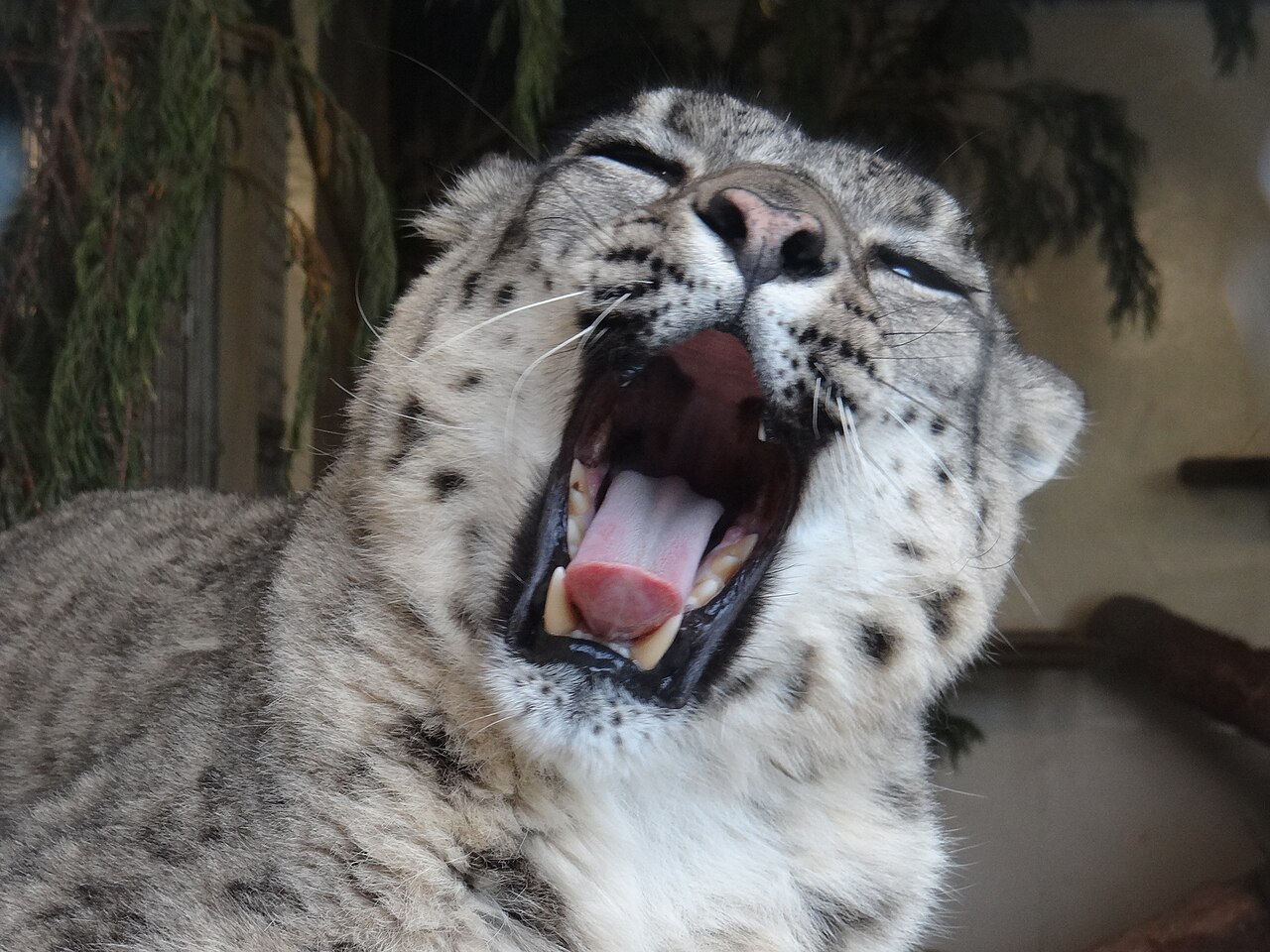
Among the five living members of the genus Panthera, the snow leopard stands out for one striking physiological absence: it cannot roar. All five species possess an elongated hyoid apparatus suspended from a chain of bones — tympanohyal, stylohyal, epihyal, and ceratohyal — anchored in the mandible and skull. Within the larynx, vocal folds built from thick collagen and elastic fiber provide the structural basis for the roar. When this tissue folds, it generates a low natural frequency that sets the cartilage walls vibrating, shifting air resistance from high to low and producing the deep, resonant sound. The lion's larynx is the longest of the group, enabling a roar audible up to ten kilometers away. The snow leopard, however, lacks the large pad of fibro-elastic tissue necessary to form a sufficiently large vocal fold. Despite sharing the elongated hyoid with its roaring relatives, this single anatomical difference renders the snow leopard fundamentally silent in the manner its cousins are not.
Smallest of the True Big Cats
Among the five extant species of the genus Panthera, the snow leopard is by far the most compact. Adults typically range from 22 to 55 kilograms, with one exceptional individual recorded at 75 kilograms. This stands in dramatic contrast to the lion, whose males commonly weigh between 150 and 250 kilograms and females between 110 and 182 kilograms, or the tiger, with males reaching 100 to 306 kilograms and females 75 to 167 kilograms. Even the liger, a hybrid offspring of a lion and tiger, can dwarf both parent species; one specimen named Nook was reported to exceed 550 kilograms. All cats, regardless of size, share the Felidae family's common musculature, cardiovascular architecture, skeletal framework, and behavioral repertoire. Yet the snow leopard's relatively modest build places it closer in mass to the cougar and cheetah, members of the subfamily Felinae, than to its own genus-mates. As obligate carnivores and apex predators, all these cats sit atop their respective food chains with no natural predators of their own.
Conservation Pressures and the Regulatory Web
Every member of the genus Panthera currently faces some level of threat on the IUCN Red List. The snow leopard, lion, and leopard are each classified as Vulnerable, the tiger as Endangered, and the jaguar as Near Threatened. Critically, all of these populations are in decline. The conservation landscape is further complicated by a complex web of international regulations governing big cat ownership and trade. In the United States, organizations seeking FWS recognition as bona fide sanctuaries must be tax-exempt non-profits, must not breed big cats, must not engage in commercial trade, and must prohibit direct public contact with the animals. Austria restricts ownership to qualified zoos overseen by a zoologist or veterinarian, while Denmark, Thailand, and India ban private ownership entirely. Russia and South Africa impose regulations on keeping their native big cats. The mere use of the word sanctuary in an organization's name offers no guarantee of genuine protection, making regulatory compliance and facility inspection essential to meaningful conservation.
Common Misconceptions (Editorial)
1. Some people mistakenly believe the snow leopard belongs to its own separate genus, but the facts confirm it is classified in the genus *Panthera*, forming a sister group with the tiger. 2. It is sometimes thought that multiple subspecies of snow leopard exist, but genetic differences have not been confirmed, so it is regarded as a monotypic species with no recognized subspecies.
Why It Matters (Editorial)
The snow leopard endures as a powerful symbol of resilience in some of the harshest environments on Earth, from the mountains of Central Asia to parts of North India. Its vulnerable status highlights the ongoing tension between human development and wildlife conservation, while its presence in heraldry and emblems shows how a single species can unite cultural identity across borders.
Gallery
Frequently Asked Questions
Who is Snow leopard?
The snow leopard (Panthera uncia) is a wild cat in the genus Panthera that roams the high-altitude ranges of Asia. It is a solitary, cold-adapted carnivore with thick whitish-grey fur marked by black spots and rosettes, built specifically for life in freezing, rocky terrain.
What are Snow leopard's powers/role?
Snow leopards possess extraordinary cold-weather adaptations: powerful lungs for thin air, a long tail used both for balance on cliffs and as a warm wrap around the face, and thick spotted fur for camouflage and insulation. Ecologically, they act as the apex predator in alpine zones, regulating prey populations across Central and South Asian mountain ranges.
How does Snow leopard's story end?
There is no final chapter yet, but the species is currently listed as Vulnerable on the IUCN Red List, with poaching and habitat fragmentation as its most serious threats. Ongoing conservation programs across its range aim to keep the snow leopard's story going for future generations.
Why is Snow leopard important?
Beyond its role as a keystone predator in fragile alpine ecosystems, the snow leopard carries deep cultural weight in Central Asia and parts of North India, where it features in heraldry and serves as a regional emblem. Protecting this species also preserves the vast, biodiverse mountain corridors it calls home.
More in Big Cats 1-22
Spotted an error? Know more?
This is a living reference — every entry is fact-audited, and reader corrections feed straight into our audit queue. Suggest an edit · See this site's audit record