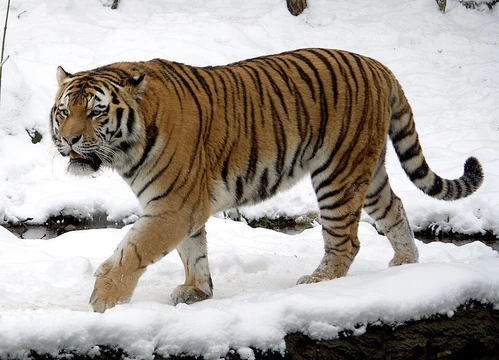
Bengal tiger
A large wild cat population native to the Indian subcontinent.

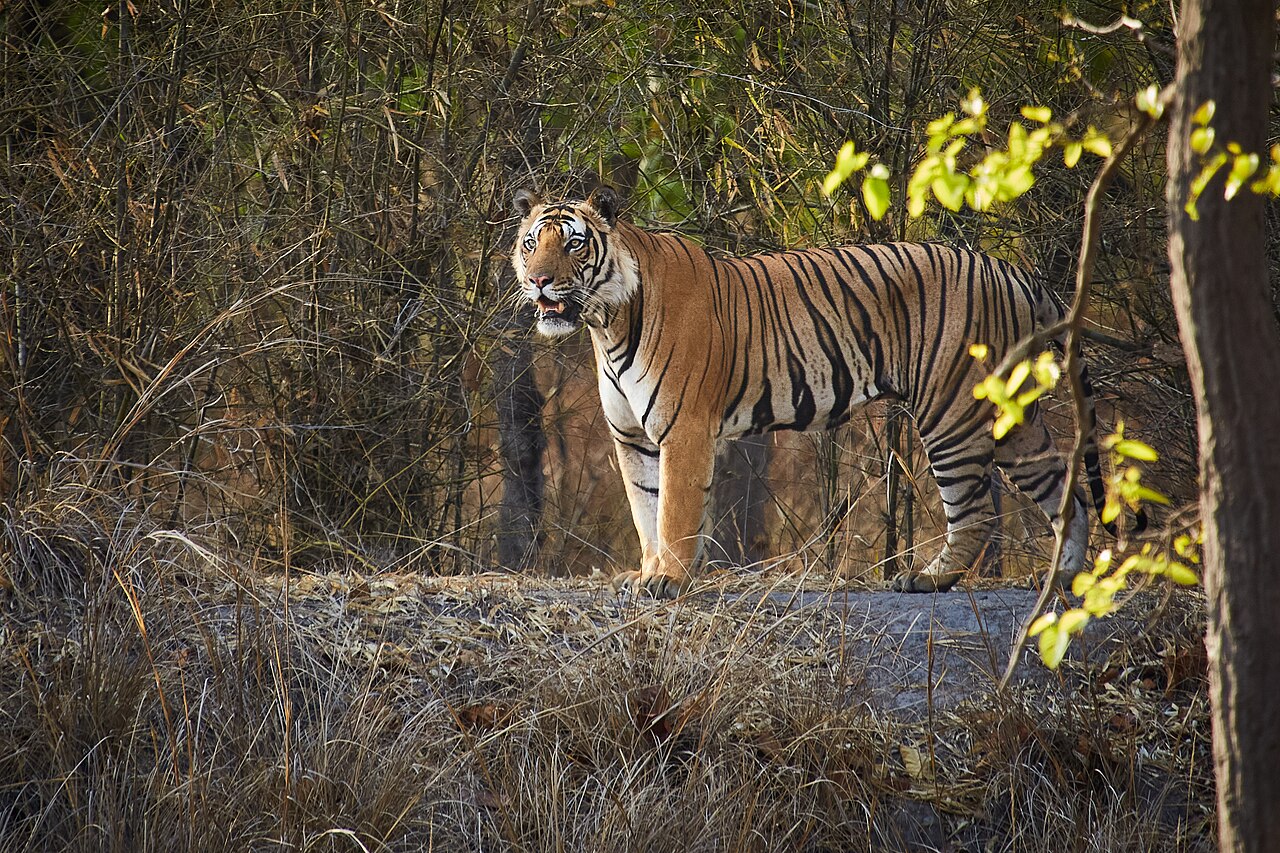
Charles J. Sharp · CC BY-SA 4.0
The Bengal tiger is a population of the Panthera tigris tigris subspecies, ranking among the largest of wild cats. It is distributed from India, southern Nepal, Bangladesh, Bhutan to Southwestern China, and its historical range extended to the Indus Basin until the early 19th century. It is the national animal of India and Bangladesh.
- Scientific name
- Panthera tigris tigris
- Subspecies
- Nominate subspecies of tiger
- Distribution
- India, southern Nepal, Bangladesh, Bhutan, Southwestern China
- National animal of
- India and Bangladesh
Lore & Background
The Bengal tiger is defined by three distinct mitochondrial nucleotide sites and 12 unique microsatellite alleles.
Reader's Guide
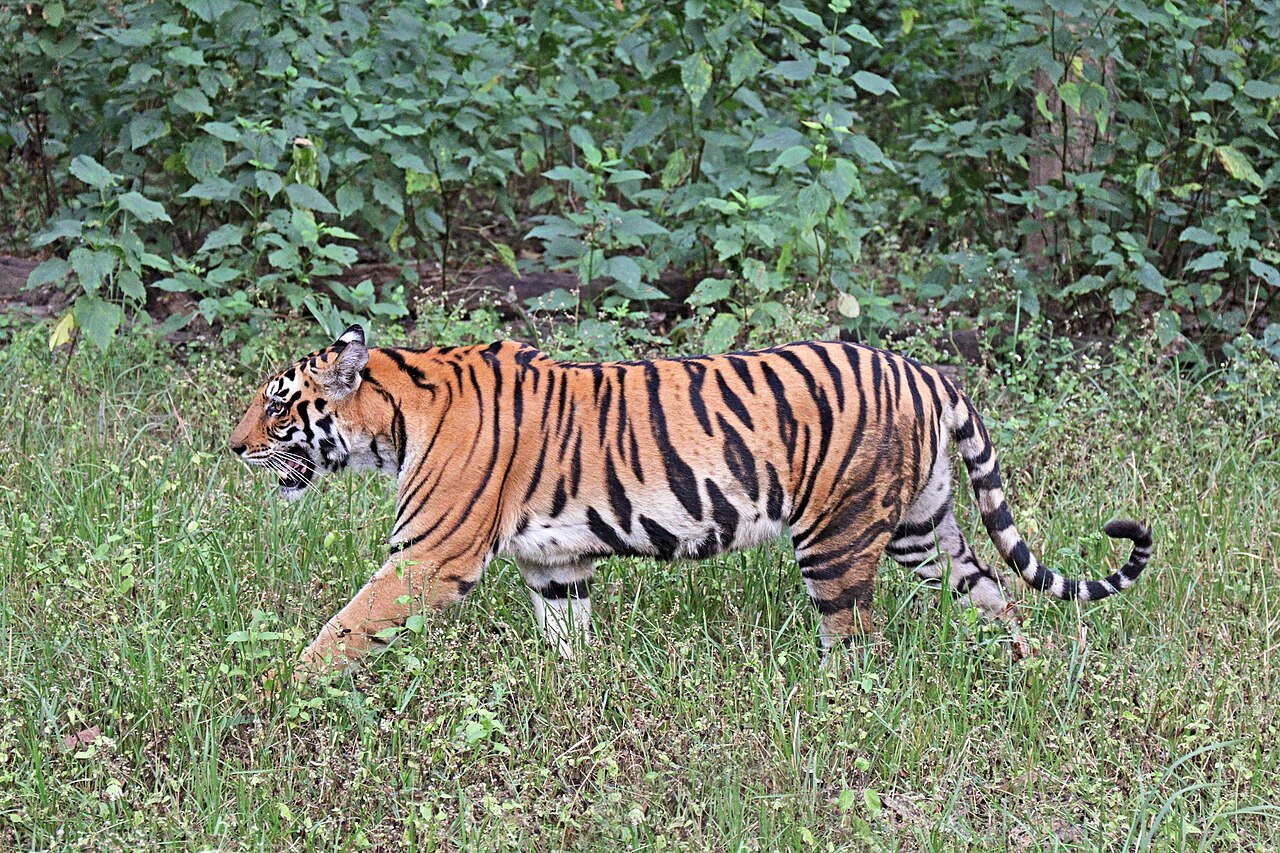
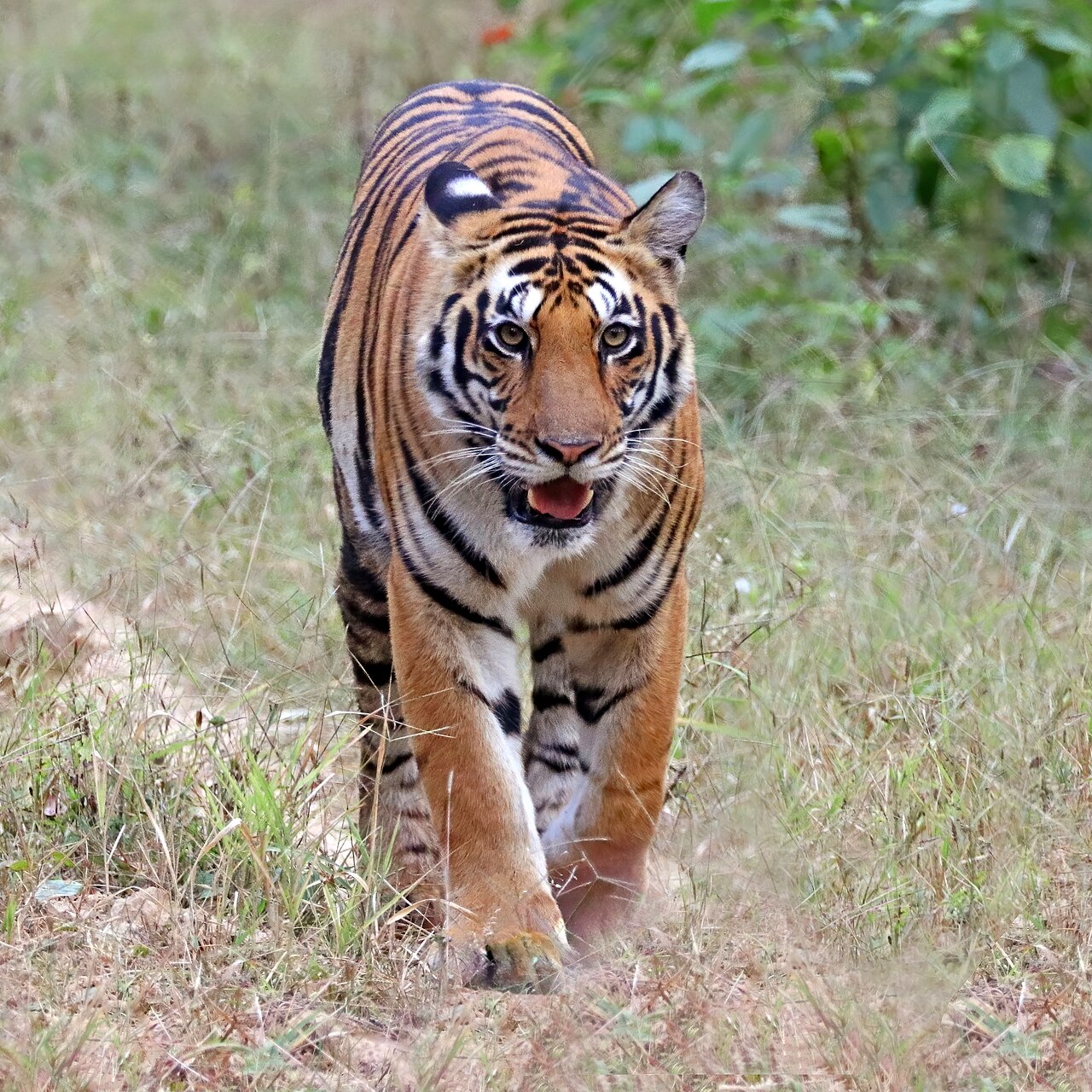
The Bengal tiger is a population of the Panthera tigris tigris subspecies, recognized as the nominate subspecies. Its historical range extended to the Indus Basin until the early 19th century, and it is thought to have been present in the Indian subcontinent since the Late Pleistocene. It is threatened by poaching, habitat loss, and habitat fragmentation. It exhibits recessive mutants such as the white tiger and golden tiger, both very rare in nature. Its coat is yellow to light orange with dark stripes, and it has exceptionally stout teeth with canines 7.5 to 10 cm long. The Bengal tiger is the national animal of India and Bangladesh.
Did You Know?
- The Bengal tiger is the national animal of India and Bangladesh.
- The white tiger is a recessive mutant, not an occurrence of albinism.
The Genetic Mystery Behind the White Coat
The pale coloring of white tigers stems from a specific point mutation in the SLC45A2 transport protein gene, a discovery that overturned long-held assumptions. For years, researchers attributed the white phenotype to a Chinchilla-type mutation in the tyrosinase enzyme, even coining the term 'partial albino' for these animals. Whole genome sequencing later revealed that white tigers carry a perfectly normal tyrosinase gene—the same gene whose knockout produces albinism in other species. Instead, a single amino acid substitution in SLC45A2 introduces an alanine residue that juts into the protein's central passageway, apparently blocking it and preventing pheomelanin expression in the fur. The trait is recessive, appearing only in homozygous individuals, though two carriers can produce white offspring. Mutations in this same gene produce cream coloration in horses and contribute to paler skin in people of European descent.
Body, Stripes, and the Temperature Effect
White Bengal tigers are not merely a color variant; they differ measurably in physical development. Compared to their orange counterparts, white individuals tend to grow faster, reach greater weight, and are somewhat larger both at birth and as adults. Their black stripes, set against a white or near-white background, are as unique as fingerprints—no two tigers share the same pattern. These stripes are a pigmentation of the skin itself, so even if the fur were shaved, the underlying pattern would remain visible. An intriguing additional trait links fur color to ambient temperature: white tigers, like Siamese cats and Himalayan rabbits, possess enzymes in their fur that react to cold, causing the coat to darken. Observations from Rewa State and Bristol Zoo suggested that tigers spending more time outdoors in winter appeared whiter, while those in warmer or dustier environments showed creamier tones. A weakened immune system has also been directly linked to reduced pigmentation in these animals.
From Royal Forests to Zoo Enclosures
That year, Martand Singh, the king of Rewa, captured a white tiger named Mohan from the Mukundpur forest in Sidhi district, an area now within the Sanjay Dubri Tiger Reserve. The natural occurrence of the white gene is extraordinarily rare—roughly one in ten thousand births—because both parents must carry the recessive allele. In the wild, white tigers likely face additional survival pressures: their lack of adequate camouflage hampers their ability to stalk prey, and as cubs they are more vulnerable to predation. Whether the rarity stems from a one-time mutation or from these ecological disadvantages remains an open question. Today, several hundred white tigers live in captivity worldwide, with about one hundred in India.
The Cost of Inbreeding and the Ethics of Display
The vast majority of white tigers alive today exist as a product of deliberate inbreeding for human entertainment, a practice that has generated severe ethical and biological consequences. The Association of Zoos and Aquariums explicitly bans this practice for institutions seeking accreditation, recognizing that the genetic toll is too great. Because the white trait is recessive, breeders have historically relied on close kin matings—such as the repeated brother-sister pairings of Bhim and Sumita at Cincinnati Zoo, which produced the modern snow-white strain—to force the gene to express itself. This strategy has introduced a range of additional genetic defects beyond the pigmentation change itself. The weakened immune system observed in white tigers is one documented consequence of reduced pigmentation. Their popularity in zoos and exotic-animal shows has been driven largely by their striking appearance, yet the animals' existence in captivity is a direct result of a breeding program that prioritizes spectacle over welfare. The fact that the natural occurrence rate is approximately one in ten thousand births underscores how far captive populations have strayed from any wild reality.
Common Misconceptions (Editorial)
Some people believe the white tiger is an albino, but the facts show it is actually a recessive mutant, not a result of albinism. Another common misconception is that the Bengal tiger is a separate subspecies, whereas it is a population of the *Panthera tigris tigris* subspecies. Additionally, its historical range once extended to the Indus Basin until the early 19th century, a fact often overlooked by those who assume it has always been confined to its current distribution.
Why It Matters (Editorial)
The Bengal tiger endures as a powerful symbol of national identity, serving as the national animal of both India and Bangladesh. Its survival reflects broader conservation challenges, as protecting this iconic predator helps preserve the diverse ecosystems it inhabits across South Asia.
Gallery
Frequently Asked Questions
What is the Bengal tiger?
The Bengal tiger is the nominate subspecies of tiger (Panthera tigris tigris) and one of the largest wild cat populations on the planet. It is native to the Indian subcontinent and stretches into parts of southwestern China.
Where do Bengal tigers live in the wild?
Their current range covers India, southern Nepal, Bangladesh, Bhutan, and southwestern China. Before the early 1800s, their territory extended much farther, reaching as far as the Indus Basin.
Why is the Bengal tiger so culturally significant?
It is the official national animal of both India and Bangladesh, giving it a powerful symbolic role in the identity of those nations. Ecologically, it also serves as the top predator that helps keep forest food webs in balance.
More in Big Cats 1-22
Spotted an error? Know more?
This is a living reference — every entry is fact-audited, and reader corrections feed straight into our audit queue. Suggest an edit · See this site's audit record