Lion
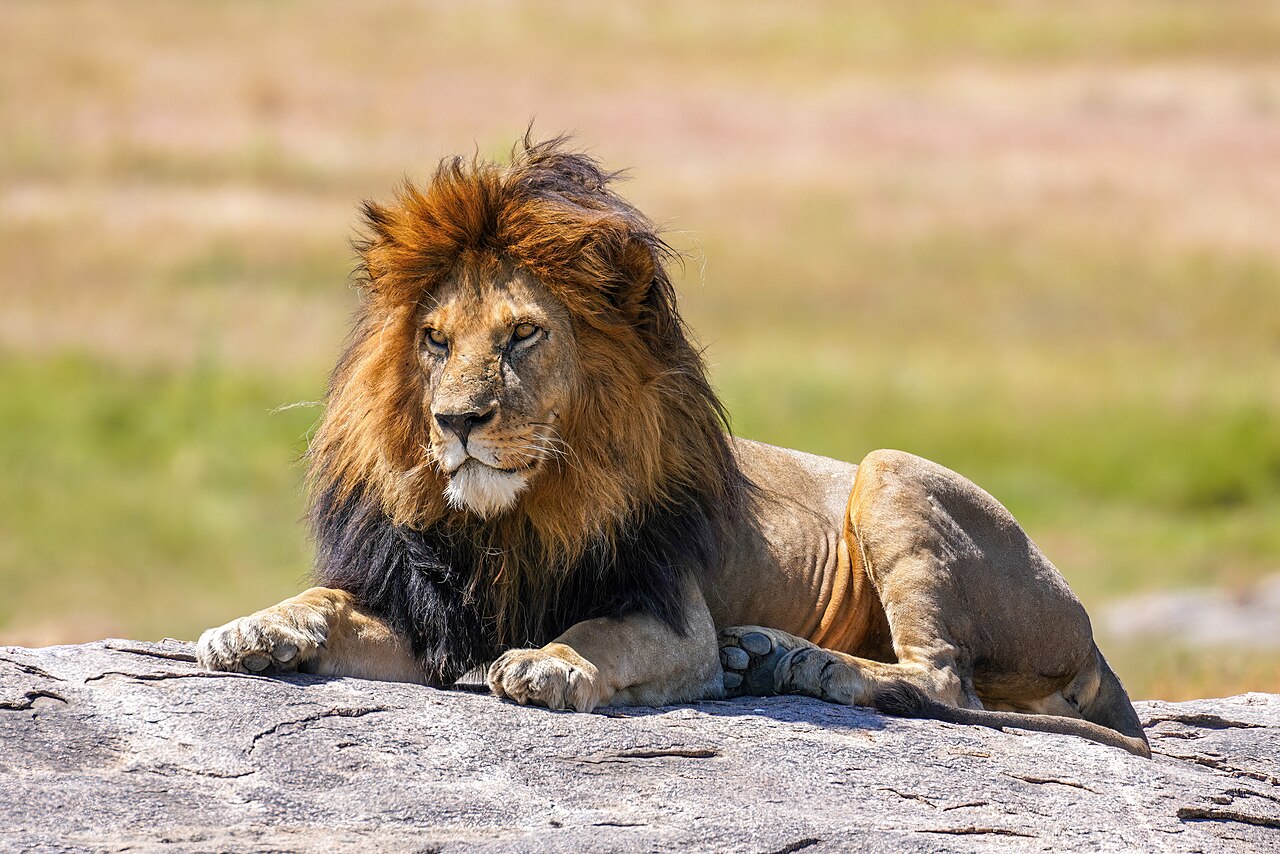
A social apex predator, symbol of power and royalty.

Giles Laurent · CC BY-SA 4.0
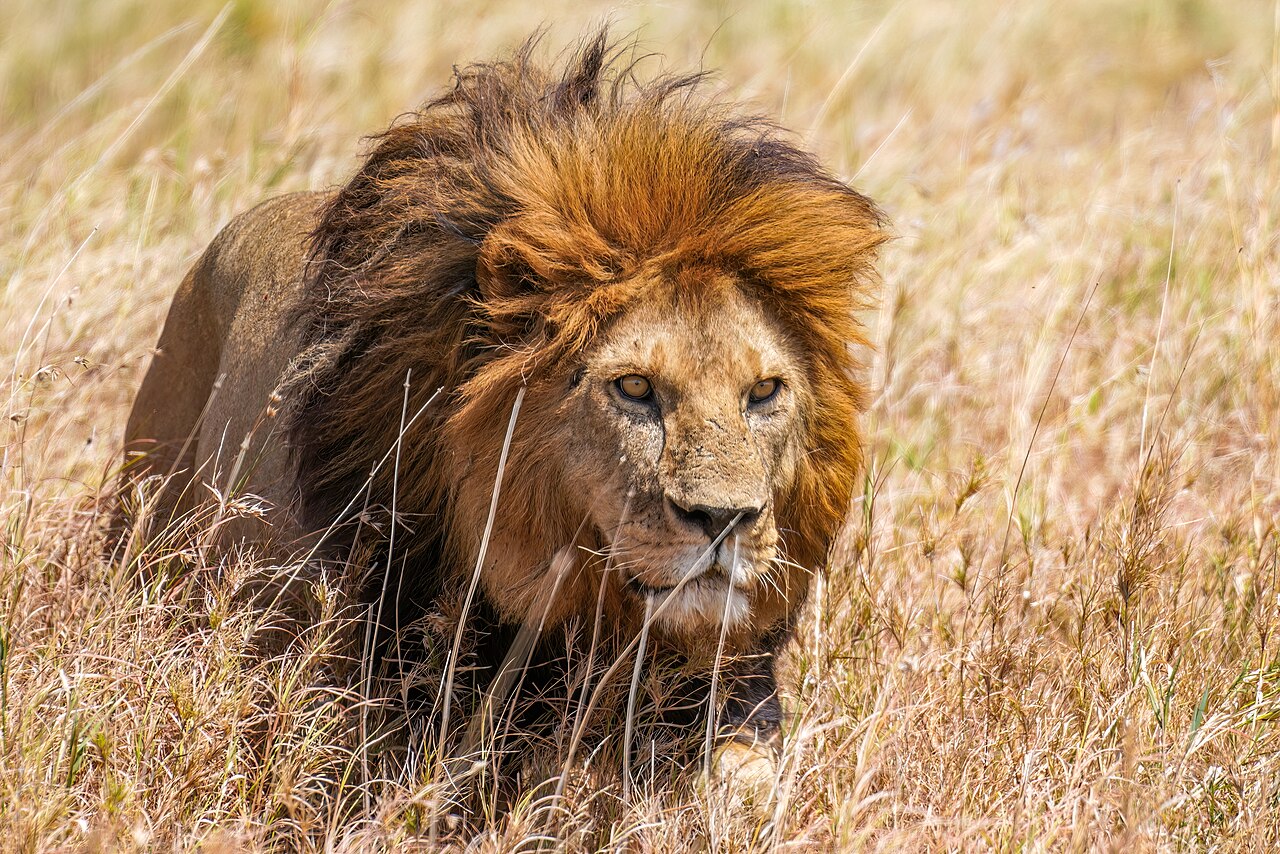
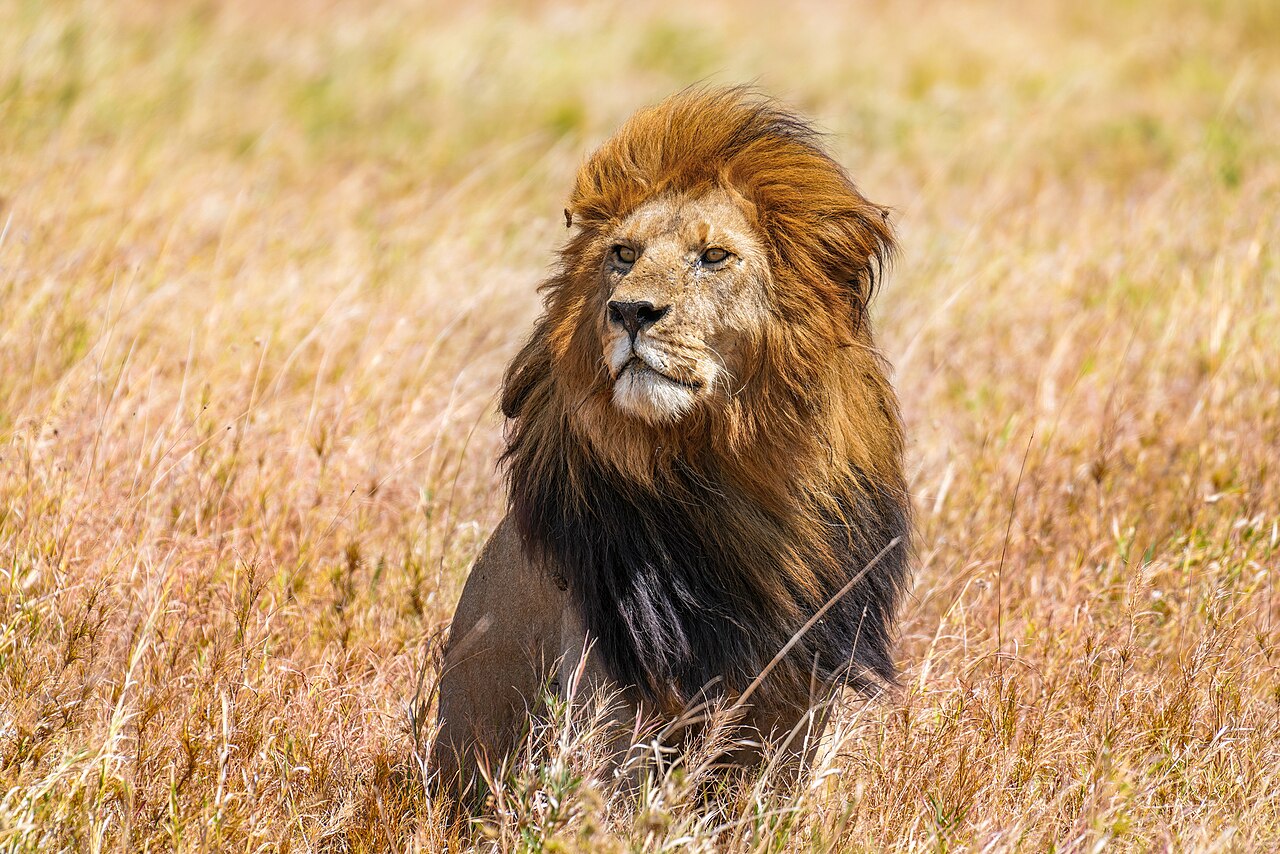
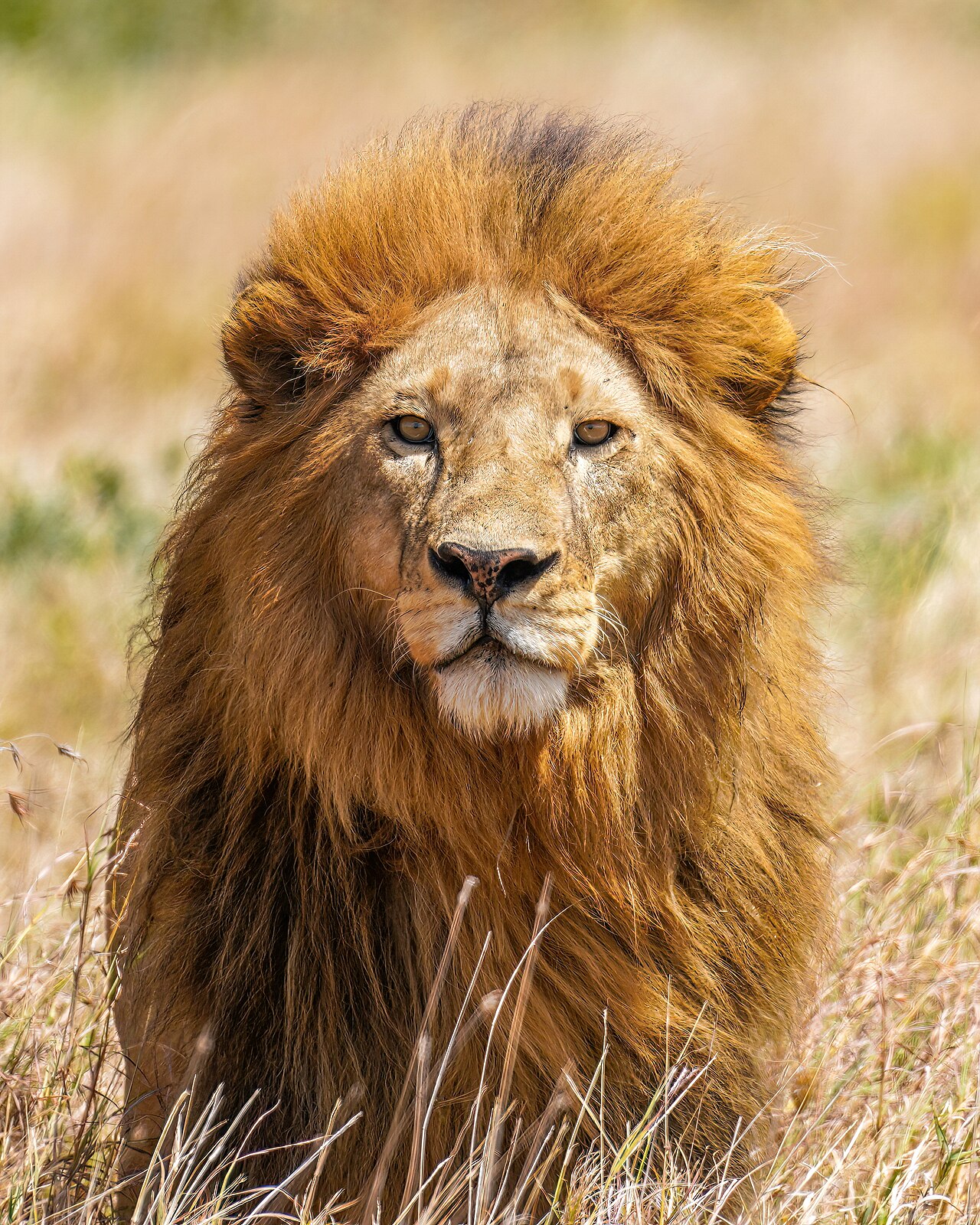
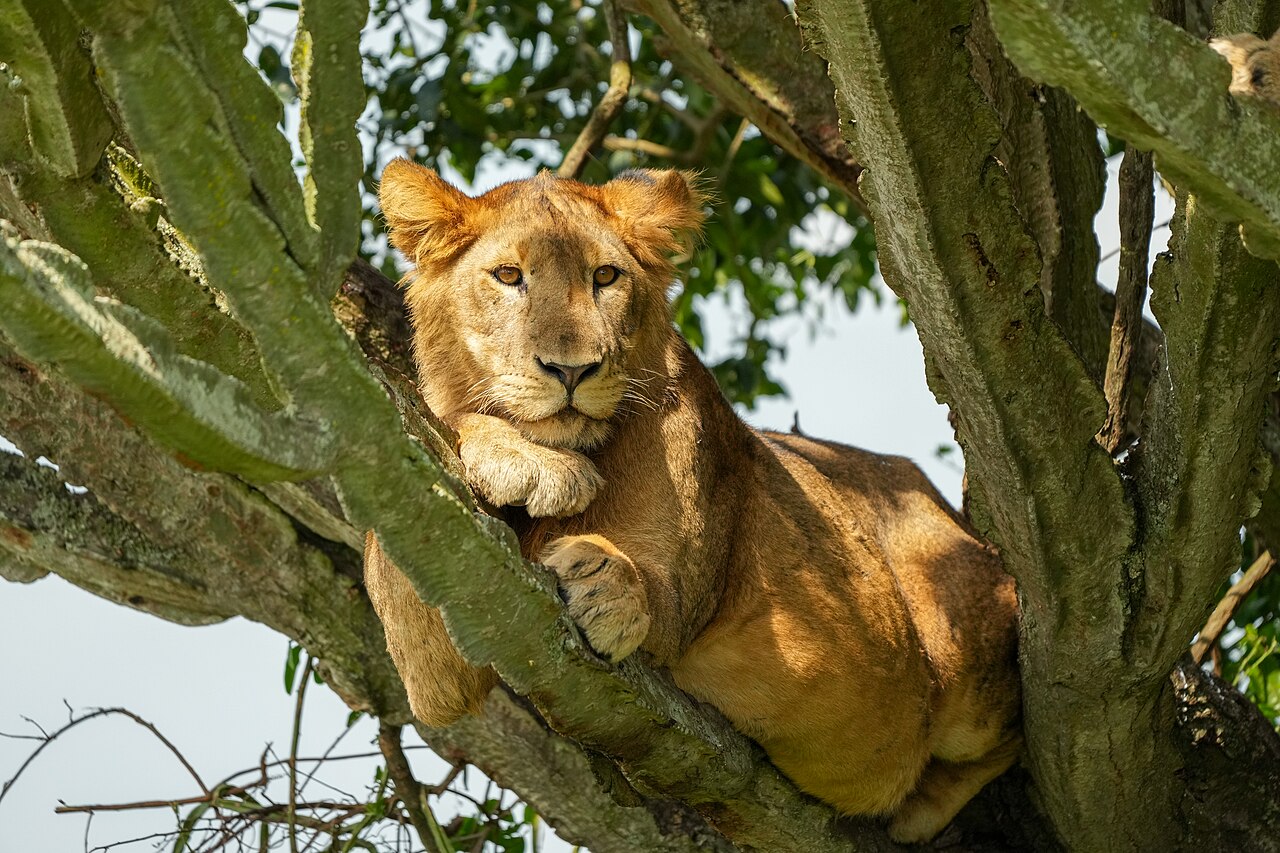
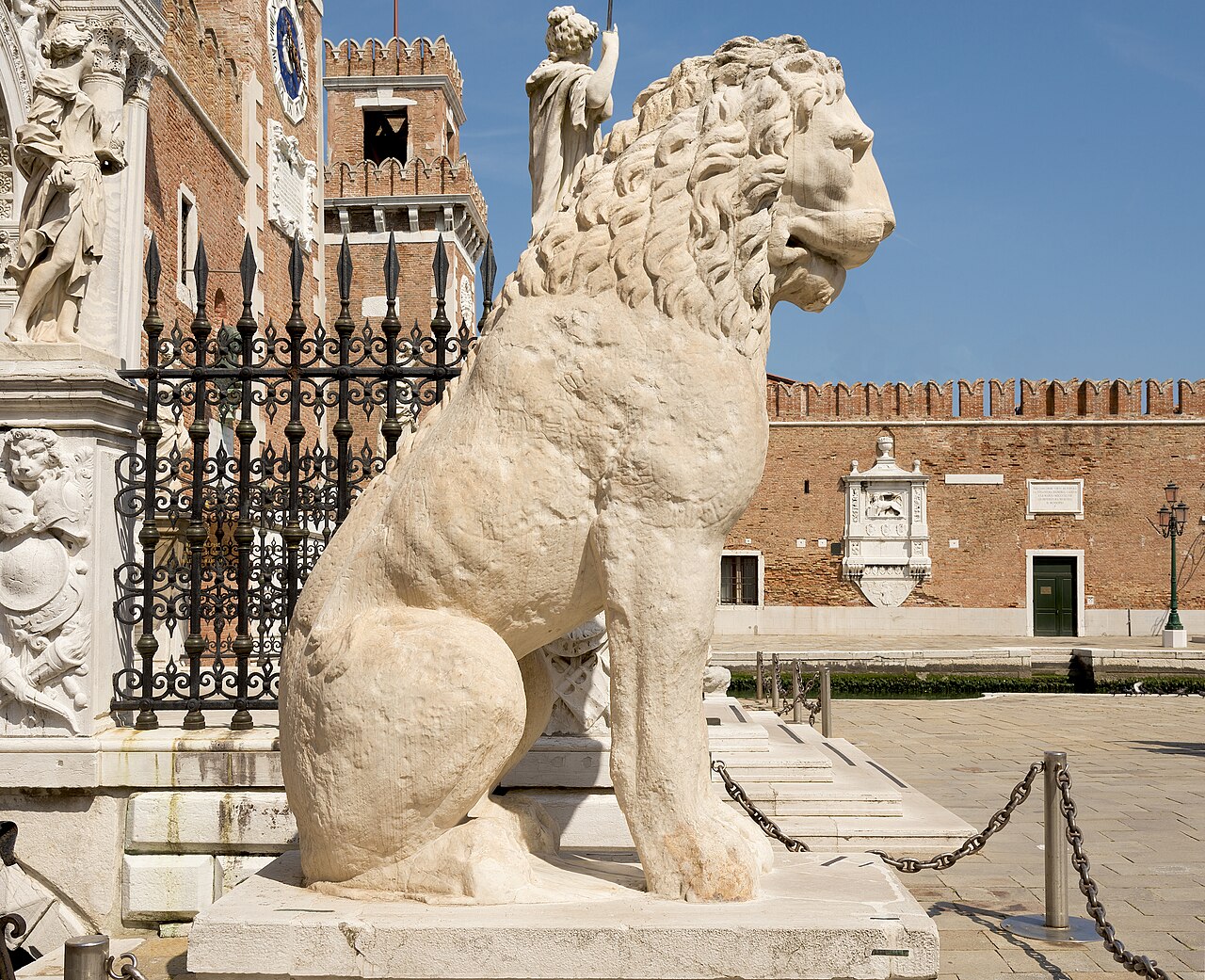
The lion (Panthera leo) is a large cat of the genus Panthera, currently ranging only in Sub-Saharan Africa and India. It is an apex and keystone predator, preying mostly on medium-sized and large hooved mammals, and is a social species forming groups called prides. The lion has been extensively depicted in sculptures, paintings, national flags, literature, and films, making it one of the most widely recognised animal symbols in human culture, particularly as a symbol of power and royalty.
- Scientific Name
- Panthera leo
- Current Range
- Sub-Saharan Africa and India
- Population Decline
- About 43% since early 1990s in African countries
- Recognized Subspecies (2017)
- P. l. leo and P. l. melanochaita
- Key Threats
- Habitat loss and conflicts with humans
Lore & Background
During the Neolithic period, the lion ranged throughout Africa and Eurasia, from Southeast Europe to India, but has been reduced to fragmented populations in sub-Saharan Africa and one population in western India. Lion populations are untenable outside designated protected areas, and habitat loss and conflicts with humans are the greatest causes for concern. The lion is sexually dimorphic; adult males are larger than females and have a prominent mane. It inhabits grasslands, savannahs, and shrublands. It is usually more diurnal than other wild cats, but when persecuted, it adapts to being active at night and at twilight. A lion pride consists of related females and cubs, and a few or one adult male who is unrelated to the females; groups of females usually hunt together, and adult males often compete to keep or gain their membership in the pride. Lions have been kept in menageries since the time of the Roman Empire and have been a key species sought for exhibition in zoological gardens across the world since the late 18th century. Cultural depictions of lions have occurred worldwide, and they figure prominently as symbols and deities in ancient religions.
Reader's Guide
The lion's significance lies in its dual role as both a keystone predator and a pervasive cultural symbol. As an apex predator, it shapes ecosystems by preying on medium-sized and large hooved mammals, and its social structure—living in prides—is unusual among large cats. The species has experienced a dramatic range contraction from a broad Neolithic distribution across Africa and Eurasia to isolated populations in sub-Saharan Africa and western India, with a 43% decline in African populations since the early 1990s. Taxonomically, the lion has been revised to two subspecies (P. l. leo and P. l. melanochaita) based on genetic studies, though some overlap in Central Africa complicates classification. Its legacy is cemented in human culture: lions have been depicted in art, literature, and film for millennia, symbolizing power and royalty, and have been exhibited in zoos since the late 18th century. The species also has a rich fossil record, including prehistoric relatives like the cave lion (P. spelaea) and American lion (P. atrox), which became extinct at the end of the last glacial period.
Did You Know?
- The lion is the only social cat, forming groups called prides consisting of related females and cubs and a few or one adult male.
- Lion populations in African countries have declined by about 43% since the early 1990s.
- The two currently recognized subspecies are P. l. leo (including the Asiatic lion) and P. l. melanochaita (including East and Southern African populations).
- Prehistoric relatives include the cave lion (Panthera spelaea) and the American lion (Panthera atrox), both extinct by the end of the last glacial period.
Evolutionary Lineage and the Panthera Family Tree
The big cats' story begins roughly 6.37 million years ago, when their ancestors branched off from the Felinae subfamily — the group that would later include everything from house cats to cougars and cheetahs. A 2010 molecular phylogenetics study clarified the internal family tree of Panthera. It revealed that the snow leopard and tiger are sister species, having diverged from the ancestral big cat around 3.9 million years ago, with the tiger reaching its distinct form by the late Pliocene, roughly 3.2 million years ago. The lion, leopard, and jaguar, by contrast, form a tighter cluster. Their shared ancestor separated from the rest between 4.3 and 3.8 million years ago. The jaguar then split from the lion-leopard lineage between 3.6 and 2.5 million years ago, and lions and leopards finally diverged from each other approximately 2 million years ago. An early fossil, P. blytheae from northern Central Asia, was once thought to be the oldest known Panthera, but later research reclassified it into a separate genus, Palaeopanthera.
The Anatomy Behind the Roar
The thunderous roar that defines Panthera species is made possible by a specialized larynx and hyoid bone apparatus. The hyoid hangs from a chain of smaller bones — tympanohyal, stylohyal, epihyal, and ceratohyal — anchored in the mandible and skull. Inside the larynx, vocal folds composed of thick collagen and elastic fibers grow denser toward the epithelial mucosal lining. When this fibro-elastic pad folds, it produces a low natural frequency that sets the cartilage walls of the larynx vibrating. The resulting sound shifts from high to low air resistance, generating the deep, resonant roar. Among the five living Panthera members, the lion possesses the longest larynx, yielding the most powerful roar of the group. Under favorable conditions, that sound carries eight to ten kilometers. The snow leopard, despite sharing the elongated hyoid, lacks the large fibro-elastic pad needed for a large vocal fold and therefore cannot roar at all.
Physical Scale Across the Genus
The Panthera genus spans a remarkable range of body mass. At the lower end, adult snow leopards typically weigh between 22 and 55 kilograms, with one exceptional individual recorded at 75 kilograms. Lions occupy a much higher tier: males generally range from 150 to 250 kilograms, while females fall between 110 and 182 kilograms. Tigers show similarly wide variation, with males from 100 to 306 kilograms and females from 75 to 167 kilograms. In the wild, exceptionally heavy male lions and tigers have been documented exceeding 306 kilograms, and in captivity some individuals approach 450 kilograms. The liger — a hybrid offspring of a lion and a tiger — can surpass both parent species in size. One documented liger named Nook reportedly weighed over 550 kilograms, dwarfing even the largest wild specimens of either parent. These figures underscore how much genetic variation exists even within a single genus of apex predators.
Conservation Status and the Web of Human Regulation
Every living member of the Panthera genus carries some level of threat designation on the IUCN Red List. Lions, leopards, and snow leopards are classified as Vulnerable; the tiger is Endangered; and the jaguar is Near Threatened. Cheetahs also fall under Vulnerable, while cougars are of Least Concern. Critically, all of these populations are in decline. In the United States, organizations wishing to operate as bona fide big cat sanctuaries must satisfy strict criteria set by the Fish and Wildlife Service: they must be tax-exempt non-profits, must not breed or commercially trade big cats or their products, must prohibit direct public contact with the animals, must maintain transaction records, and must permit inspections. Internationally, regulations vary widely. Austria restricts ownership to qualified zoos overseen by a zoologist or veterinarian. Russia and South Africa regulate private ownership of native species, while Denmark, Thailand, and India ban all private big cat possession outright.
Common Misconceptions (Editorial)
A common misconception is that lions are primarily nocturnal. In fact, the species is usually more diurnal than other wild cats, though it adapts to being active at night and at twilight when persecuted. Another misconception is that a lion pride consists of a dominant male with multiple females and their young, with the male leading the hunt. In reality, a pride is made up of related females and cubs, plus a few or one adult male who is unrelated to the females, and groups of females usually do the hunting together.
Why It Matters (Editorial)
The lion endures as a symbol of power and royalty because its social complexity and physical majesty have captivated human imagination for millennia, from ancient religions to modern zoos. Yet its dramatic range contraction—from across Eurasia to just fragmented pockets in Africa and one in India—makes it a sobering measure of humanity’s impact on the natural world, underscoring the urgent need for coexistence and conservation.
Gallery
Frequently Asked Questions
What is the lion and where can it be found today?
The lion (Panthera leo) is a large member of the Panthera genus, and its wild populations are now restricted to Sub-Saharan Africa and a small region of India.
What role does the lion play in its ecosystem?
It functions as both an apex and keystone predator, primarily hunting medium- to large-sized hoofed mammals, and it is one of the few truly social big cats, living in cooperative groups called prides.
Why is the lion so culturally significant?
Because lions have appeared in sculpture, painting, national flags, literature, and film for centuries, they have become one of the most universally recognized animal symbols, most often associated with power and royalty.
More in Big Cats 1-22
Spotted an error? Know more?
This is a living reference — every entry is fact-audited, and reader corrections feed straight into our audit queue. Suggest an edit · See this site's audit record