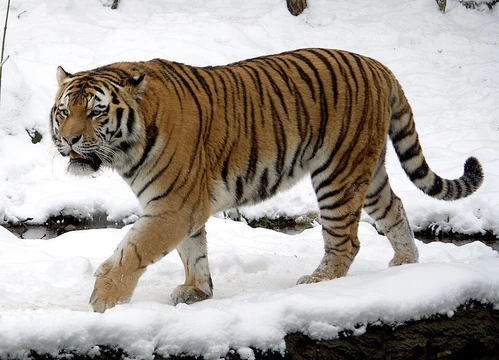
Jaguar
Largest American cat, keystone predator with a crushing bite.

Giles Laurent · CC BY-SA 4.0
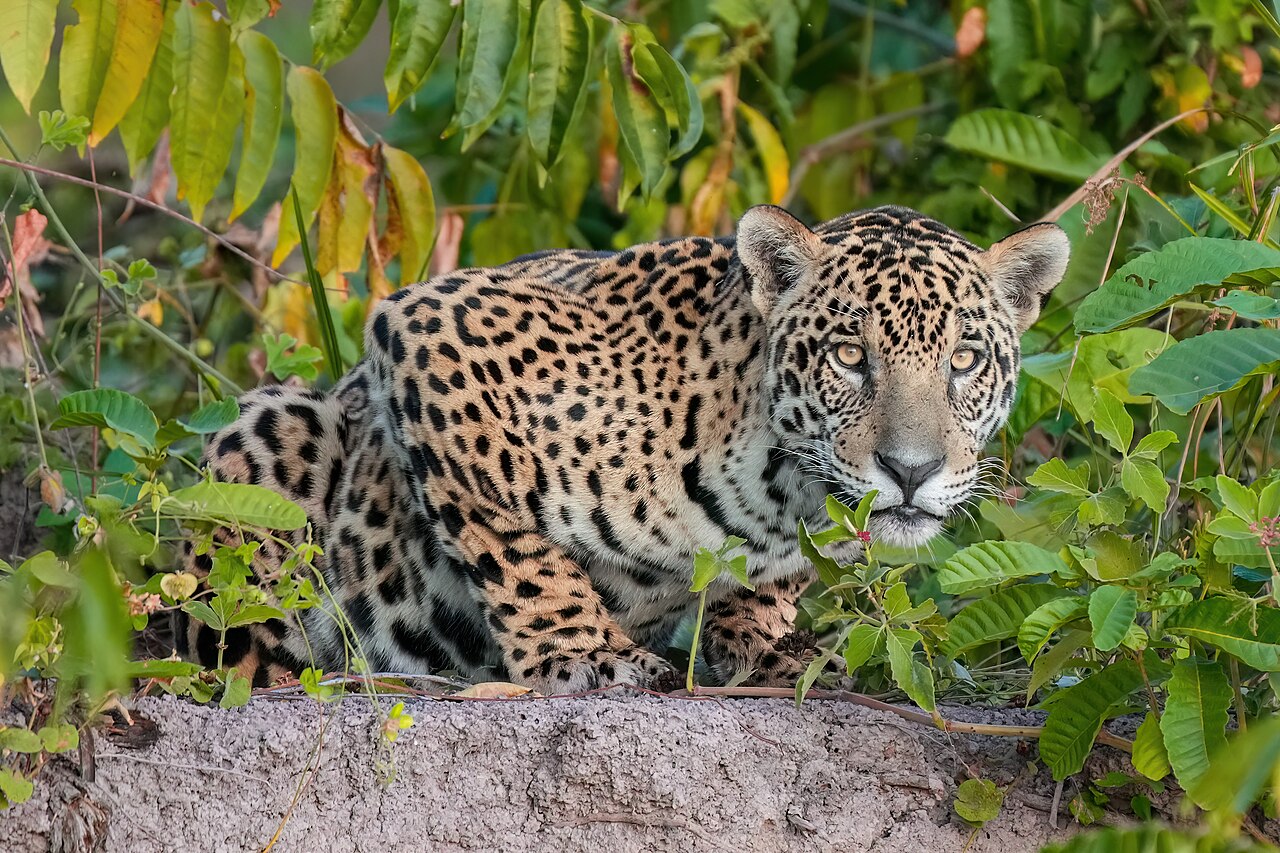
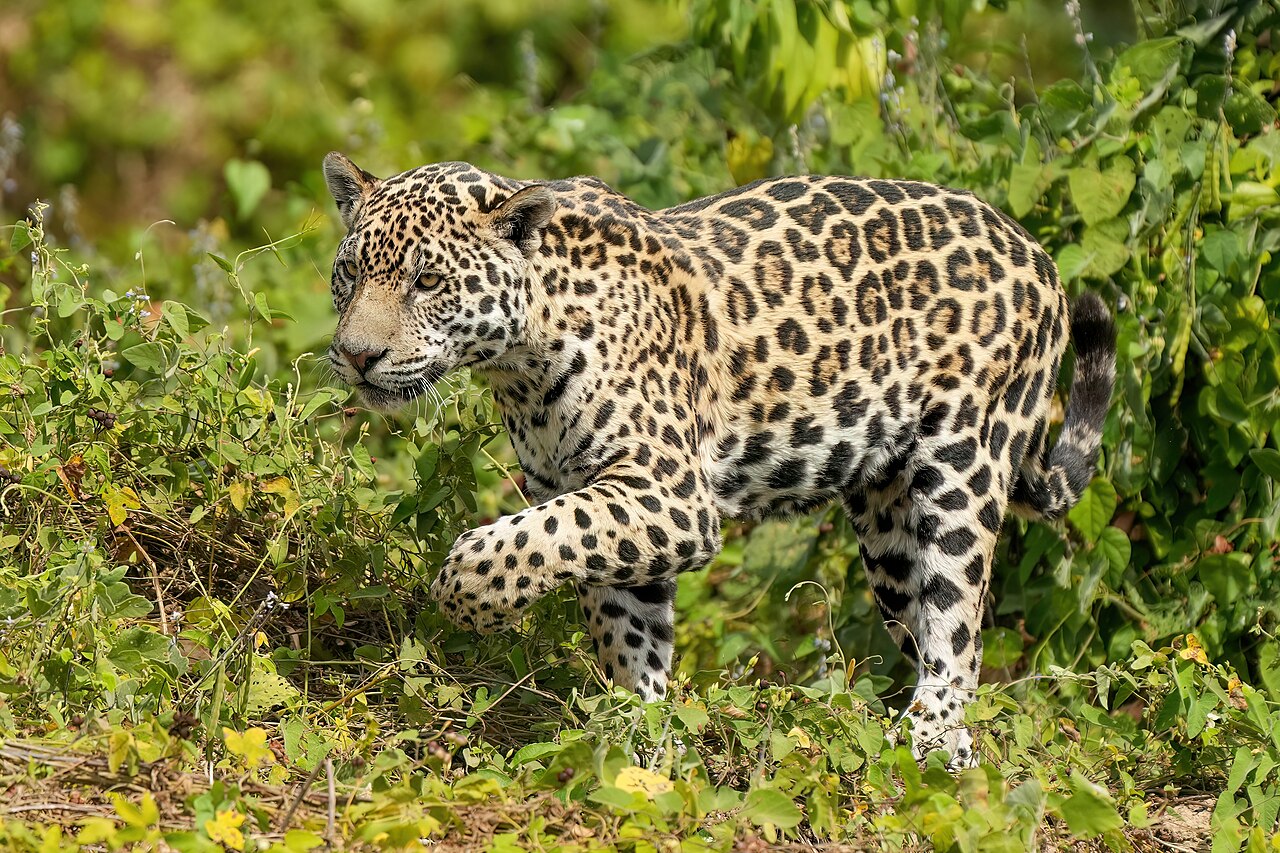
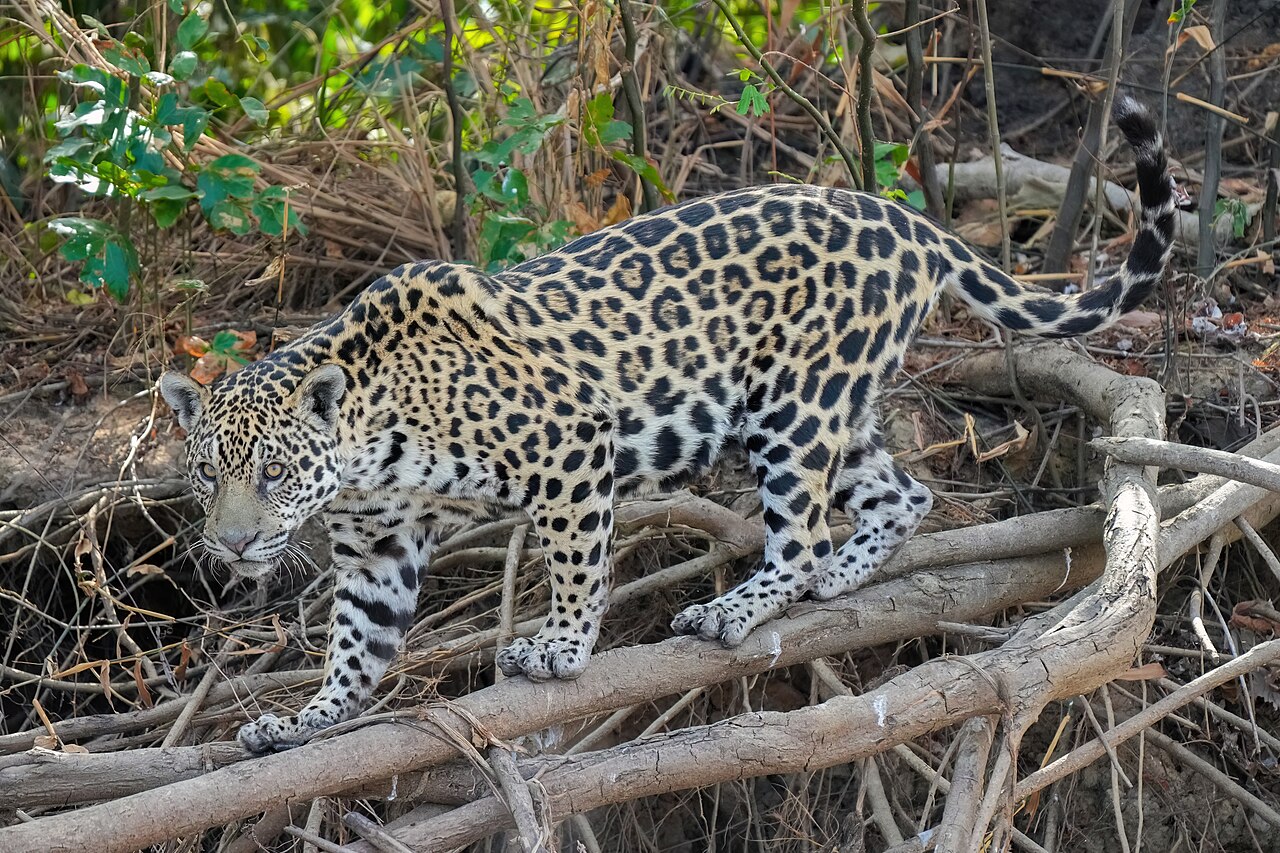
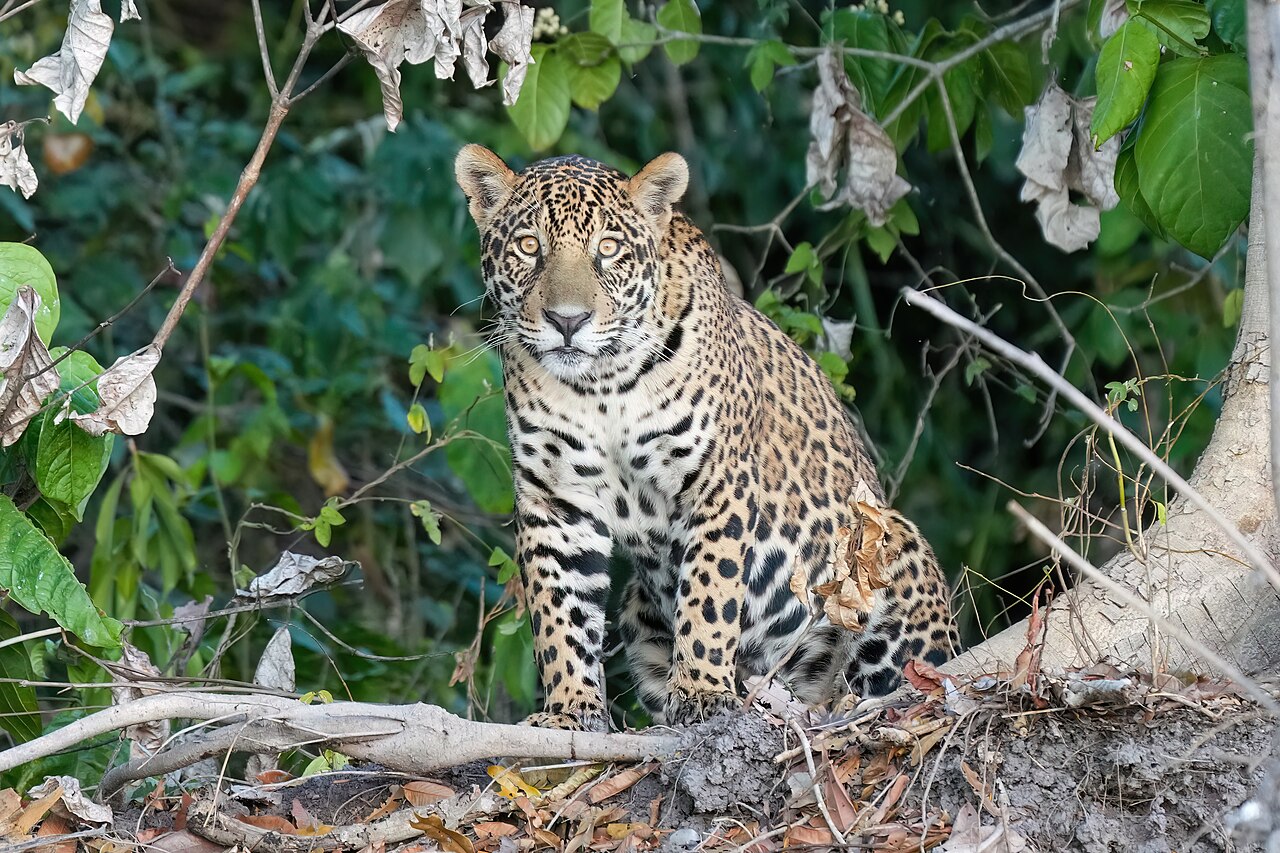
The jaguar (Panthera onca) is a large cat species and the only living member of the genus Panthera native to the Americas. It is the biggest cat in the Americas and the third largest in the world, known for its powerful bite that can pierce turtle shells and deliver a fatal bite through the skull of mammalian prey. As a keystone species, it plays an important role in stabilizing ecosystems and regulating prey populations.
- scientific_name
- Panthera onca
- body_length
- up to 1.85 m (6 ft 1 in)
- shoulder_height
- 57 to 81 cm (22.4 to 31.9 in)
- native_range
- Southwestern United States to Paraguay and northern Argentina
- preferred_habitat
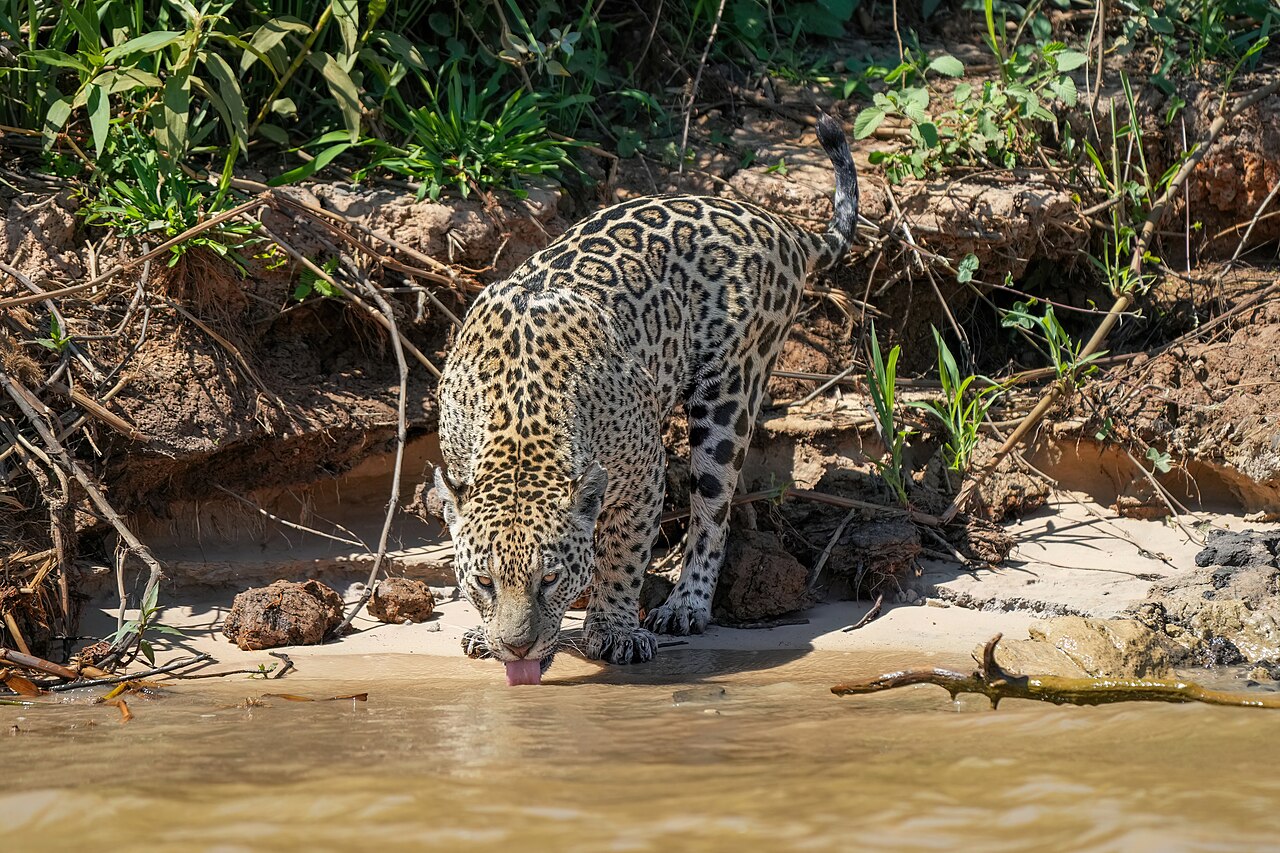
- tropical and subtropical moist broadleaf forest, wetlands, wooded regions
Lore & Background
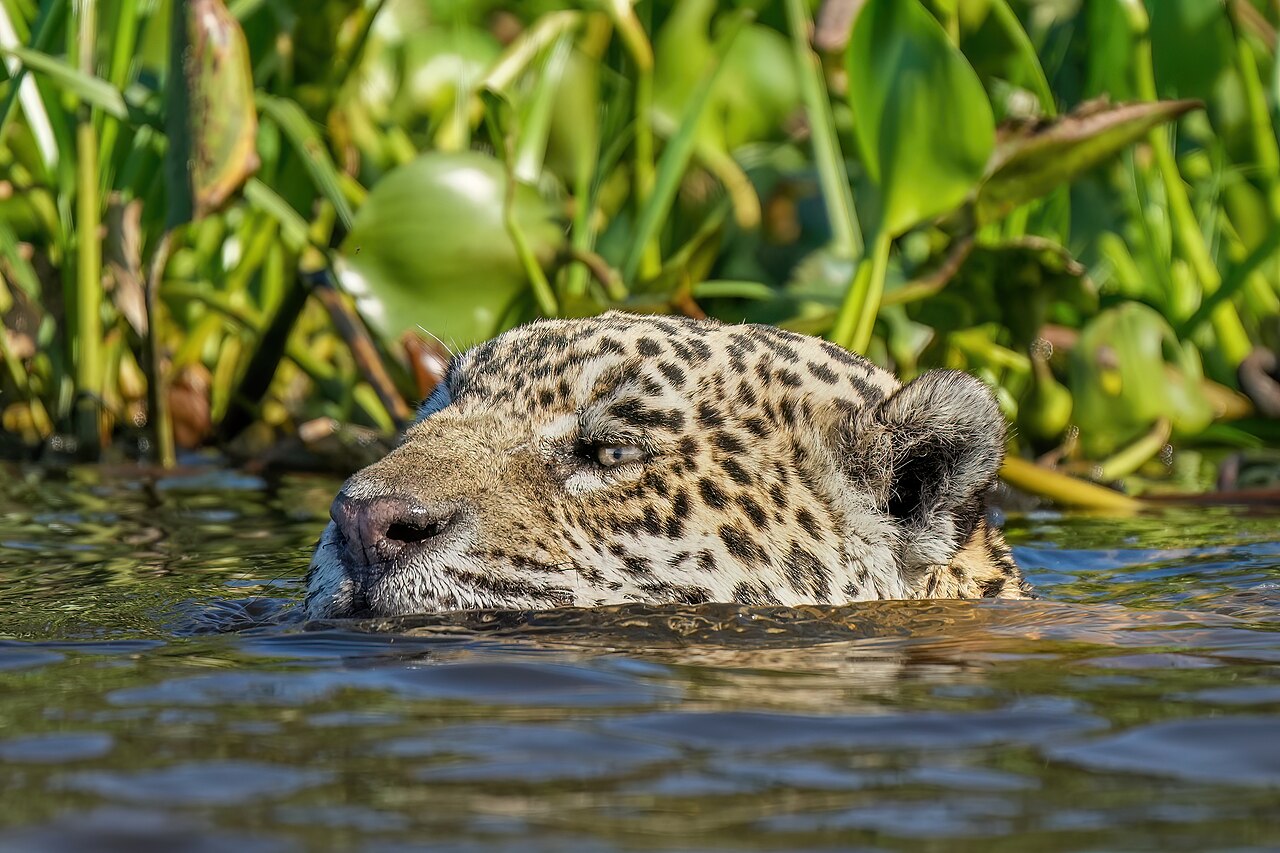
The jaguar's ancestors likely entered the Americas from Eurasia during the Early Pleistocene via the Bering Strait land bridge. The oldest jaguar fossils in North America date to between 0.85 and 0.82 million years ago. Today, its range extends from the Southwestern United States across Mexico, Central America, the Amazon rainforest, and south to Paraguay and northern Argentina. It inhabits forested and open terrains, but prefers tropical and subtropical moist broadleaf forest, wetlands, and wooded regions. It is adept at swimming and is a solitary, opportunistic, stalk-and-ambush apex predator.
Reader's Guide
The jaguar is threatened by habitat loss, habitat fragmentation, poaching for trade with its body parts, and killings in human–wildlife conflict, particularly with ranchers in Central and South America. Priority areas for conservation comprise 51 large areas inhabited by at least 50 breeding individuals, called Jaguar Conservation Units, located in 36 geographic regions from Mexico to Argentina. The jaguar has featured prominently in the mythology of indigenous peoples of the Americas, including the Aztec and Maya civilizations. The word 'jaguar' possibly derives from the Tupi-Guarani word yaguara meaning 'wild beast that overcomes its prey at a bound.'
Did You Know?
- The jaguar's powerful bite allows it to pierce the carapaces of turtles and tortoises.
- It employs an unusual killing method: biting directly through the skull of mammalian prey between the ears.
- The oldest jaguar fossils in North America date to between 0.85 and 0.82 million years ago.
- The word 'jaguar' is possibly derived from the Tupi-Guarani word yaguara meaning 'wild beast that overcomes its prey at a bound.'
Deep Roots of the Big Cat Lineage
The evolutionary story of the big cats stretches back millions of years. Roughly 6.37 million years ago, the ancestors of today's Panthera genus branched off from the Felinae subfamily, a group that still encompasses most small and medium-sized cats, including our domestic companions, as well as larger forms like the cougar and cheetah. A 2010 molecular phylogenetics study clarified the internal relationships within Panthera, revealing that the snow leopard and tiger are sister species, while the lion, leopard, and jaguar form a tighter cluster. The tiger and snow leopard split from their common ancestor around 3.9 million years ago, with the tiger completing its divergence into a distinct species near the close of the Pliocene, approximately 3.2 million years ago. The lion-leopard-jaguar lineage separated from other big cats between 4.3 and 3.8 million years ago. The jaguar then broke away from the shared ancestor of lions and leopards somewhere between 3.6 and 2.5 million years ago, and lions and leopards finally parted ways roughly 2 million years ago. An early fossil candidate, P. blytheae from northern Central Asia, was once considered the oldest known Panthera, but later research reclassified it into a separate genus, Palaeopanthera.
The Engineering Behind the Roar
The thunderous roar that defines most big cats is the product of a remarkably specialized anatomical system. At the core sits an elongated larynx supported by a uniquely shaped hyoid bone, which itself hangs from a chain of four smaller bones—the tympanohyal, stylohyal, epihyal, and ceratohyal—anchored in the mandible and skull. Inside the larynx, vocal folds composed of dense collagen and elastic fiber create a large fibro-elastic pad. When this pad folds, it generates a low natural frequency that sets the cartilage walls of the larynx vibrating. The resulting sound travels through a gradient of air resistance, shifting from high to low, producing the deep, resonant roar. The lion possesses the longest larynx of the group, yielding the most powerful vocalization, audible up to eight or even ten kilometers under favorable conditions. All five living Panthera species share this elongated hyoid structure, yet the snow leopard is the one exception that cannot roar. It lacks the large fibro-elastic tissue pad necessary to stretch the vocal fold to the degree required, making its vocal repertoire fundamentally different from its roaring relatives.
A Family Built for the Apex
The big cats occupy a distinctive position within the broader cat family, Felidae. The five true members of the genus Panthera—the tiger, lion, jaguar, leopard, and snow leopard—belong to the subfamily Pantherinae, while the cheetah (genus Acinonyx) and cougar (genus Puma) fall under the subfamily Felinae, which otherwise contains mostly small to medium-sized cats. Despite this taxonomic split, all cats in the family share broadly similar musculature, cardiovascular architecture, skeletal frameworks, and behavioral patterns. The cheetah and cougar, however, diverge physically from their Panthera cousins and, to an even greater degree, from the smaller cats. As obligate carnivores, these large predators sit at the very top of their respective food chains, with no natural predators of their own. Their native ranges span three continents: the Americas, Africa, and Asia, with the leopard and tiger additionally extending into parts of Europe, specifically Russia. This combination of shared feline biology and specialized apex-predator physiology makes the big cat group a fascinating study in evolutionary convergence and divergence.
Under Threat and Under Regulation
Every big cat species currently faces a declining population, and the IUCN Red List reflects this reality with varying levels of concern. The tiger is classified as Endangered; the lion, leopard, snow leopard, and cheetah are all listed as Vulnerable; the jaguar is Near Threatened; and the cougar is of Least Concern. The principal threats shift depending on geography, but the downward trend is universal. In the realm of human interaction, regulations around big cat ownership vary dramatically by country. In the United States, organizations seeking sanctuary status must be tax-exempt non-profits that do not breed cats, engage in commercial trade, or allow public contact, and they must submit to inspections by the Fish and Wildlife Service. Austria restricts big cat ownership to qualified zoos supervised by a zoologist or veterinarian. Russia and South Africa regulate private ownership of their native species, while Denmark, Thailand, and India ban all private big cat possession outright. Even hybrid animals like the liger—a cross between lion and tiger—draw attention, with one specimen named Nook reportedly exceeding 550 kilograms, far surpassing either parent species.
Common Misconceptions (Editorial)
A common misconception is that jaguars are the largest cats in the world. In fact, they are the third largest, after tigers and lions. Another misconception is that jaguars kill prey mainly by suffocation or throat bites; however, they employ an unusual killing method by biting directly through the skull of mammalian prey between the ears.
Why It Matters (Editorial)
The jaguar matters not only as a formidable apex predator but as a keystone species that stabilizes entire ecosystems across the Americas. Its enduring cultural and ecological significance, from ancient indigenous reverence to its critical role in regulating prey populations, underscores why protecting this solitary and powerful cat is essential for biodiversity.
Gallery
Frequently Asked Questions
Who is Jaguar?
Jaguar (Panthera onca) is the largest wild cat found anywhere in the Americas and the only surviving member of the genus Panthera native to the Western Hemisphere. It ranks as the third-largest living cat on Earth.
What makes Jaguar's bite unique?
Rather than targeting the throat like most big cats, Jaguar delivers a crushing, skull-piercing bite strong enough to crack through turtle shells. This makes it one of the most powerful biters in the feline world relative to its body size.
Why is Jaguar important to its ecosystem?
As a keystone predator, Jaguar regulates prey populations and helps keep the overall structure of its habitat in balance. Removing it would set off cascading effects that ripple through the entire food web.
More in Big Cats 1-22
Spotted an error? Know more?
This is a living reference — every entry is fact-audited, and reader corrections feed straight into our audit queue. Suggest an edit · See this site's audit record