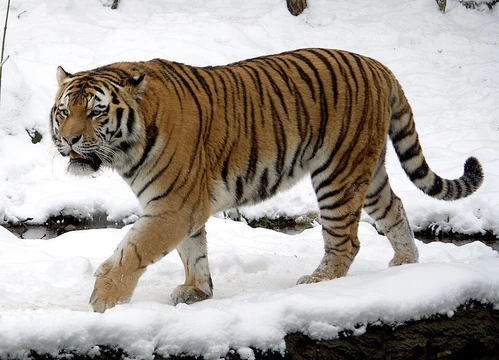
Clouded leopard
A wild cat with cloud-like markings and the largest canines proportionally.

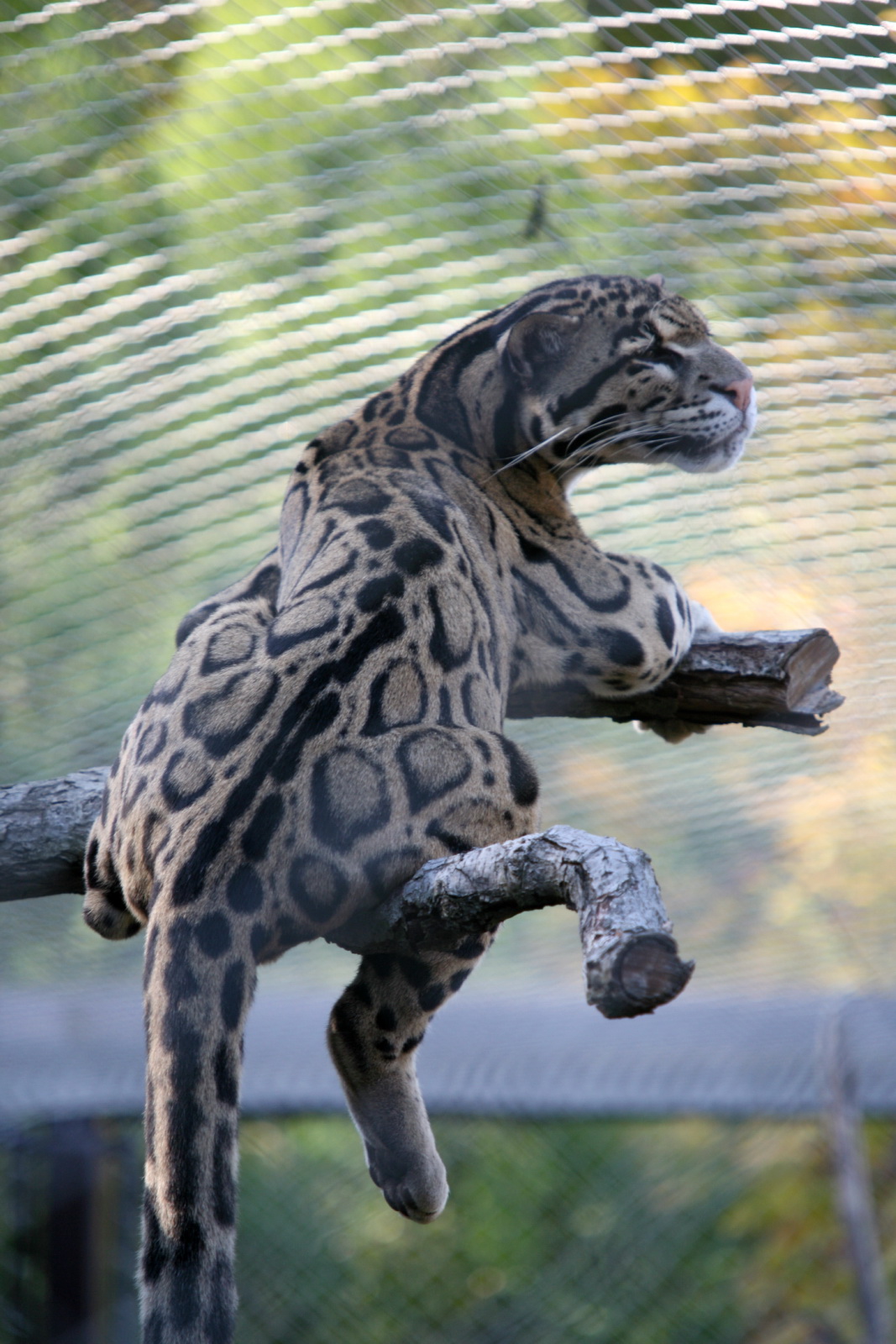
Charles Barilleaux from Cincinnati, Ohio, United States of America · CC BY 2.0
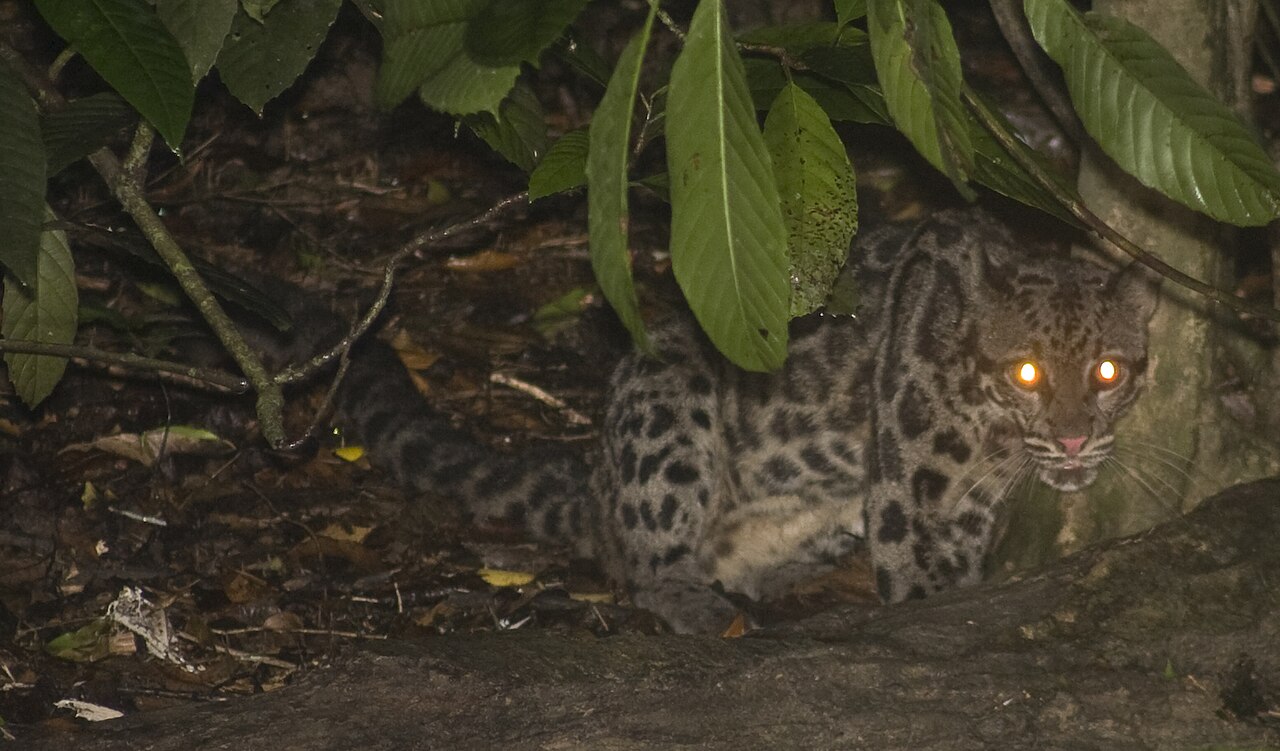
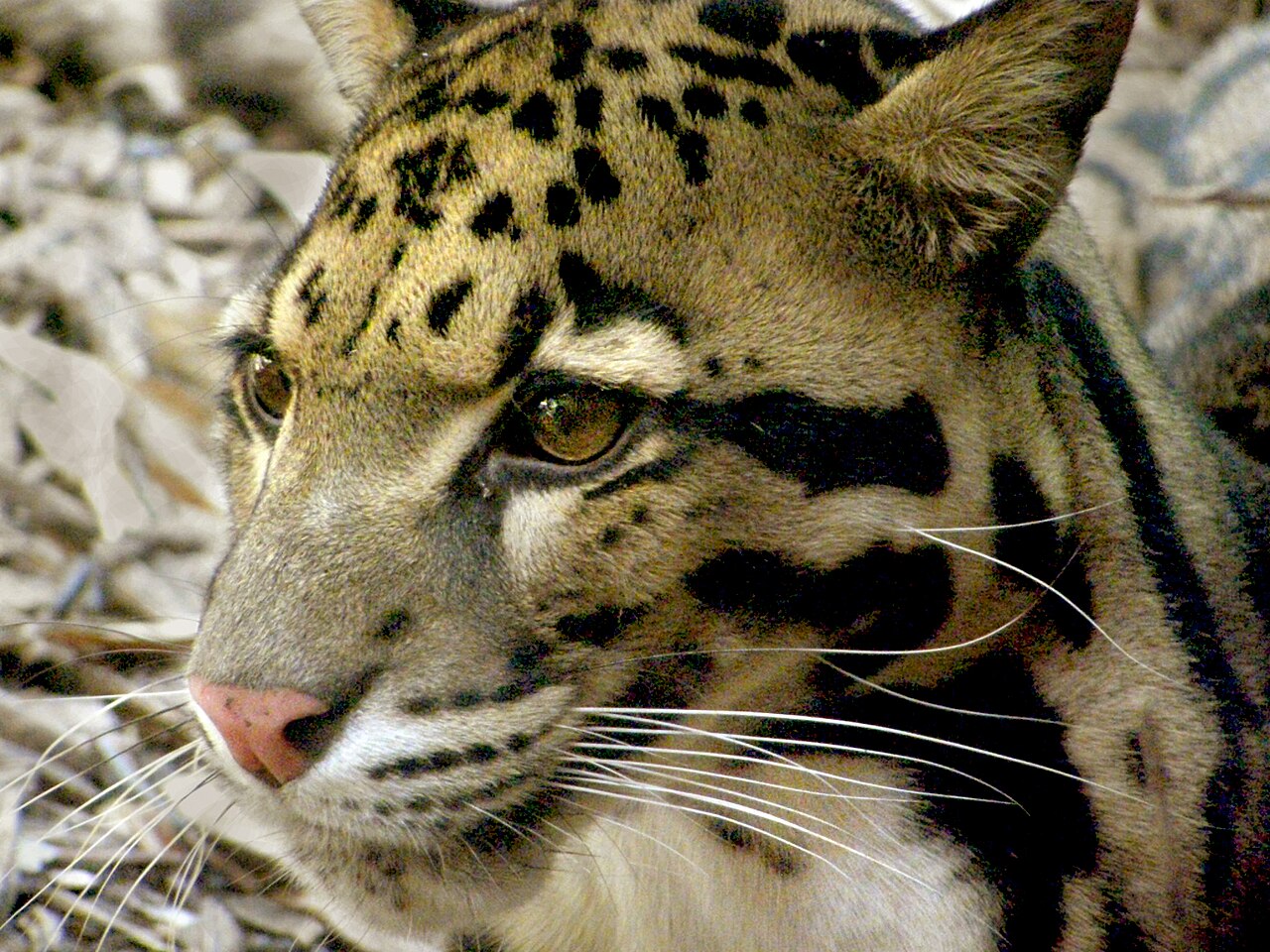
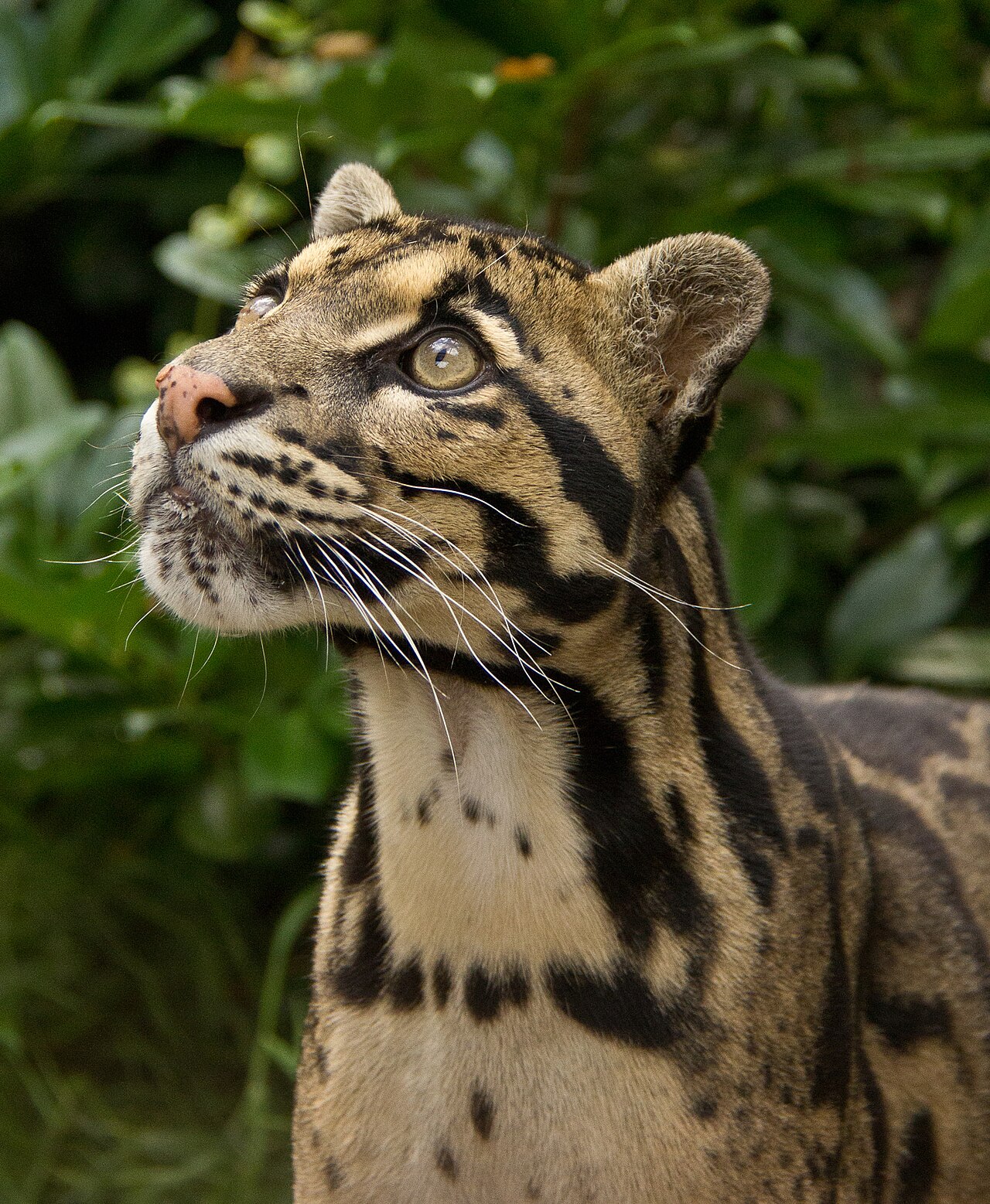
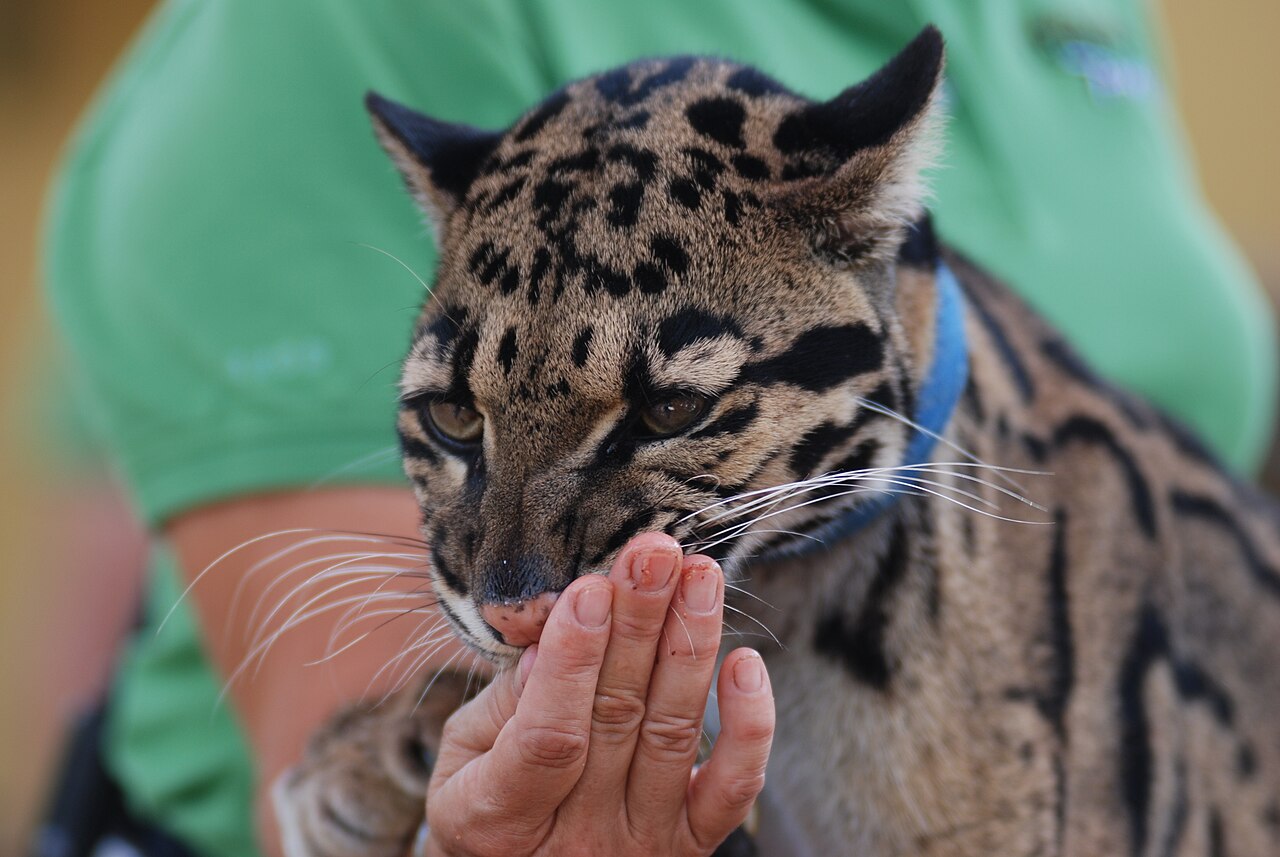
The clouded leopard (Neofelis nebulosa), also called mainland clouded leopard, is a wild cat with large dusky-grey blotches and irregular spots and stripes reminiscent of clouds. It is the sister taxon to other pantherine cats, having genetically diverged 9.32 to 4.47 million years ago. It inhabits dense forests from the foothills of the Himalayas through Northeast India and Bhutan to mainland Southeast Asia into South China.
- tail length
- 61 to 91 cm (24 to 36 in)
- weight
- 11.5 to 23 kg (25 and 51 lb)
- shoulder height
- 50 to 55 cm (20 to 22 in)
- average lifespan in captivity
- 11 years
Lore & Background
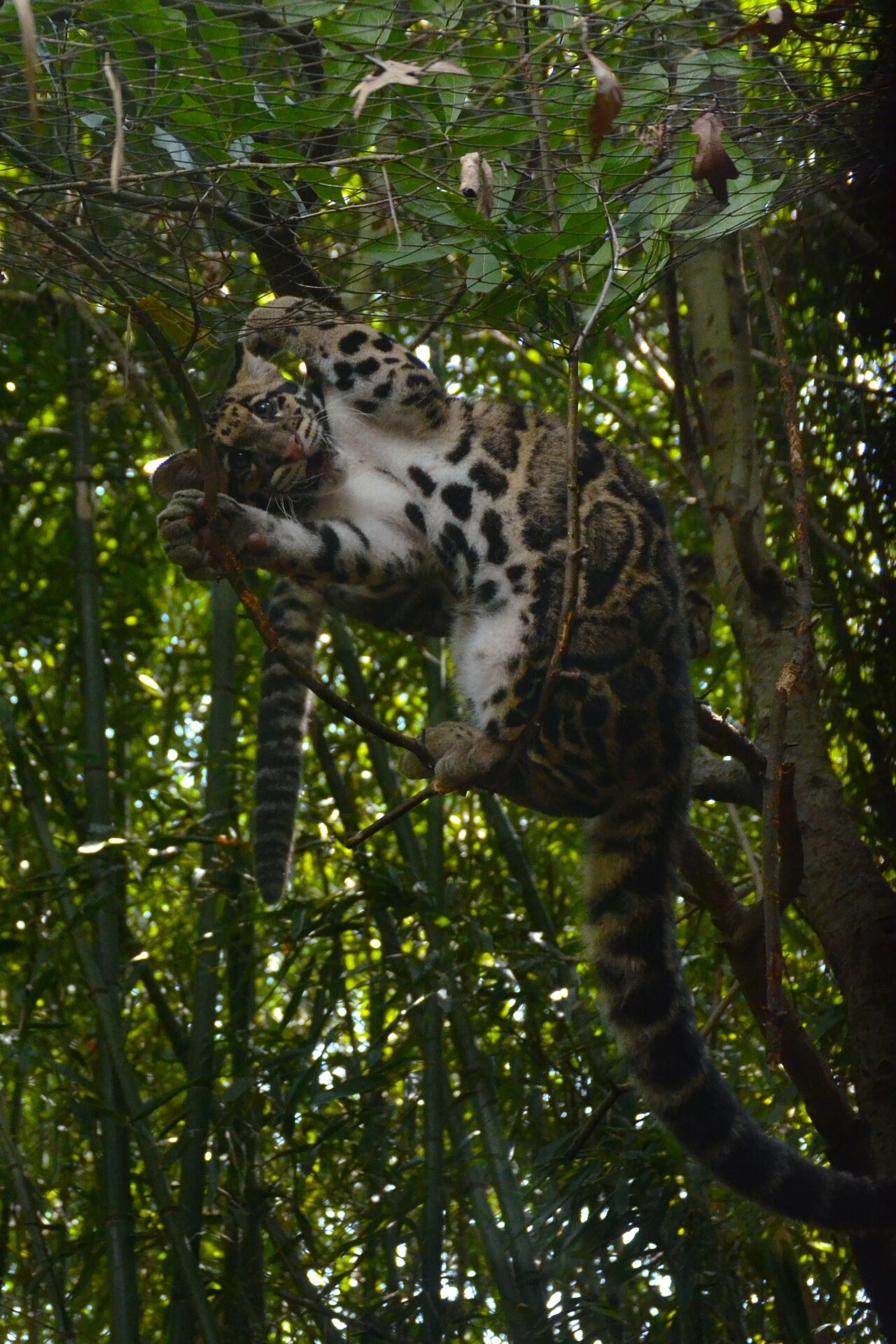
It is the sister taxon to other pantherine cats, having genetically diverged 9.32 to 4.47 million years ago. It can climb down vertical tree trunks head first, rests in trees during the day and hunts by night on the forest floor. Its hyoid bone is ossified, making it possible to purr, and its pupils contract into vertical slits. Melanistic individuals are uncommon. The clouded leopard is often referred to as a 'modern-day sabre-tooth' because it has the largest canines in proportion to its body size.
Reader's Guide
The clouded leopard is significant as a distinct evolutionary lineage within the Pantherinae, having diverged millions of years ago. Its unique morphology, including exceptionally long canine teeth and a flexible ankle joint, allows it to be an adept arboreal predator. The species is threatened by large-scale deforestation and commercial poaching for the wildlife trade, with its body parts offered for decoration and clothing. It is legally protected in most range countries. Captive breeding programs were initiated in the 1980s, and it has been kept in zoological gardens since the early 20th century. The clouded leopard is locally extinct in Singapore and Taiwan, and possibly also in Hainan Island and Vietnam.
Did You Know?
- The clouded leopard can climb down vertical tree trunks head first.
- Its upper canine teeth measure 4 cm (1.6 in) or longer.
- The clouded leopard is the sister taxon to all other pantherine cats.
Taxonomy and Deep Evolutionary Roots
The story of how the Sunda clouded leopard came to be recognized as its own species spans nearly two centuries. A morphometric survey of 57 pelages confirmed the two groups differ most visibly in the size of their cloud markings. The evidence pointed to a divergence between two and 0.9 million years ago, with the shared ancestor likely crossing a now-submerged land bridge. A plausible scenario involves Bornean cats recolonizing Sumatra during low sea-level periods before rising waters severed the connection again.
A Cat Built for the Canopy
The Sunda clouded leopard wears a coat of grayish yellow or muted gray, distinguished from its mainland cousin by a noticeably darker tone and smaller cloud patterns. Along its back runs a double midline, while the shoulders carry small, irregular cloud-like markings studded with frequent interior spots. These clouds arrange themselves in two or more vertical rows cascading down the flanks from the back. The animal's stocky frame carries between 12 and 26 kilograms, and its tail can stretch to match the length of its entire body, serving as a counterbalance during agile movement. One of its most remarkable anatomical features is its canine teeth, measuring roughly 5.1 centimeters—proportionally the longest of any living cat species when compared to skull length. Its ossified hyoid bone allows it to purr, a trait shared with domestic cats but absent in larger felids, and its pupils narrow to vertical slits. Despite these adaptations for an arboreal lifestyle, the Sunda clouded leopard hunts primarily on the ground, reserving its impressive climbing ability for escaping threats rather than pursuing prey.
Two Islands, Two Ecologies
Restricted entirely to Borneo and Sumatra, the Sunda clouded leopard occupies different ecological niches on each island. Outside protected zones, density drops to perhaps one individual per 100 square kilometers. In Sumatra, records come from Kerinci Seblat, Gunung Leuser, and Bukit Barisan Selatan National Parks, with the species appearing more abundant in hilly and montane terrain. However, its density there is markedly lower—around 1.29 per 100 square kilometers—possibly because it shares its range with the Sumatran tiger, whereas on Borneo it holds the position of apex carnivore. Fossils excavated on Java suggest the species may have gone extinct there during the Holocene.
A Species Losing Its Forest
As a strongly arboreal, forest-dependent predator, it is acutely sensitive to the loss of canopy cover. In southern Sumatra, vast tracts of lowland tropical evergreen forest have been cleared since the early 1970s, and the fragmentation of remaining stands leaves wildlife exposed to human encroachment. In Kalimantan and around Sebangau National Park, recurring forest fires compound the damage. Poaching adds another layer of pressure; in Brunei's Belait District, locals have been selling pelts at lucrative prices.
Common Misconceptions (Editorial)
Some people think the clouded leopard is a big cat that roars, but its ossified hyoid bone allows it to purr instead. Others believe it is a close relative of the sabre-toothed tiger, but while it is called a “modern-day sabre-tooth” due to its large canines, it is actually the sister taxon to all other pantherine cats and not directly descended from prehistoric sabre-tooths. Another common misconception is that it primarily stays on the ground; in fact, it rests in trees during the day and hunts by night on the forest floor, and it can even climb down vertical tree trunks head first.
Why It Matters (Editorial)
The clouded leopard endures as a symbol of the elusive and ancient biodiversity of Southeast Asia’s dense forests. Its unique evolutionary position as the sister taxon to all other pantherine cats, combined with its remarkable adaptations like the ability to climb headfirst down trees and its proportionally huge canines, reminds us how much evolutionary wonder still lurks in shrinking wilderness—and how urgently those habitats need protection.
Gallery
Frequently Asked Questions
What are Clouded leopard's powers/role?
The clouded leopard has the largest canine teeth relative to body size of any living cat, giving it an exceptionally powerful bite for its weight. It is also a supremely agile climber, using its long tail and flexible joints to move through the dense forest canopy where it hunts.
Why is Clouded leopard important?
Genetically, the clouded leopard is the sister lineage to all other pantherine cats, having split off 9.32 to 4.47 million years ago, which makes it a critical reference point in big-cat evolutionary history. Ecologically, it functions as a top predator in the forest ecosystems it occupies.
More in Big Cats 1-22
Spotted an error? Know more?
This is a living reference — every entry is fact-audited, and reader corrections feed straight into our audit queue. Suggest an edit · See this site's audit record